
Author

admin

Browsing

Statistics Canada released July’s consumer price index (CPI) data on Tuesday (August 19). The figures show that inflation decelerated in the month, posting a 1.7 percent year-on-year gain, down from the 1.9 percent recorded in June.

The most significant contributor to the fall was a 16.1 percent decline in gasoline prices from the same period last year.

Excluding the lower costs at the pumps, CPI remained steady at 2.5 percent, the same increase as May and June.

The national reporting agency released June’s mineral production survey on Wednesday (August 20).

The data indicates that production and shipments increased across the board, with copper production rising to 39.17 million kilograms, gold rising to 16,935 kilograms and silver increasing to 29,081 kilograms.

For shipments, copper increased to 45.96 million kilograms from 34.38 million kilograms, gold shipments rose to 18,554 kilograms from 16,725, and silver jumped to 31,391 kilograms from 27,614 kilograms.

On Thursday (August 21), Canadian Prime Minister Mark Carney had a phone call with US President Donald Trump. Although the prime minister’s office has provided few details, the two leaders reportedly had a “productive and wide-ranging conversation” about the current trade dispute, as well as economic and security relations.

Carney and Trump are expected to speak again soon.

South of the border, US Federal Reserve Chair Jerome Powell gave his speech at the Jackson Hole Economic Policy Symposium on Friday (August 22). In his remarks, he said that the Fed’s dual mandate goal is in balance, with the labor market remaining near maximum employment, while inflation has eased from post-pandemic highs.

However, he also said that “a shifting balance of risks may warrant adjusting our policy stance,” hinting at a near-term cut to the Fed’s benchmark interest rate. Expectations are high for a 25 basis point cut in September.

Markets and commodities react

Canadian equity markets were positive this week. The S&P/TSX Composite Index (INDEXTSI:OSPTX) was in record territory, closing the week up 1.44 percent to set at another all-time high of 28,333.13. The S&P/TSX Venture Composite Index (INDEXTSI:JX) did even better, climbing 2.45 percent to finish Friday at 803.61. The CSE Composite Index (CSE:CSECOMP) slumped mid-week but recovered on Friday to post a slight gain of 0.48 percent to 158.82.

US equity markets were mixed this week, but strong gains on Friday following Powell’s comments kept them in record high territory. The S&P 500 (INDEXSP:INX) was up 1.52 percent on Friday, but down by 0.16 percent over the past five days to 6,466.92, while the Nasdaq 100 (INDEXNASDAQ:NDX) rose 1.51 percent on Friday, but sank 1.33 percent on the week to 23,497.83 on Wednesday. Meanwhile, the Dow Jones Industrial Average (INDEXDJX:.DJI) was the sole weekly gainer, rising 1.89 percent on Friday and 1.04 percent on the week to post a new record high of 45,631.73.

The gold price was largely flat this week, but also surged on Friday after Powell hinted at a near-term rate cut, rising 1.11 percent on the week to US$3,373.21 per ounce by 4:00 p.m. EDT on Friday.

Silver saw similar movements, but ended the week with a more significant gain of 2.62 percent US$38.90 per ounce.

Copper saw little change again this week, posting a 0.22 percent decrease to US$4.52 per pound. The S&P GSCI (INDEXSP:SPGSCI) commodities index posted an increase of 1.92 percent by close on Friday, finishing at 545.11.

Top Canadian mining stocks this week

How did mining stocks perform against this backdrop?

Take a look at this week’s five best-performing Canadian mining stocks below.

Stock data for this article was retrieved at 4:00 p.m. EDT on Friday using TradingView’s stock screener. Only companies trading on the TSX, TSXV and CSE with market caps greater than C$10 million are included. Mineral companies within the non-energy minerals, energy minerals, process industry and producer manufacturing sectors were considered.

1. StrategX Elements (CSE:STGX)

Weekly gain: 63.64 percent
Market cap: C$11.57 million
Share price: C$0.18

StrategX Elements is advancing a portfolio of projects in the Northwest Territories and Nunavut, Canada.

Its most recent focus has been its Nagvaak project in Nunavut, which hosts a 6 kilometer mineralized zone with deposits of nickel, vanadium, cobalt, copper, silver and platinum-group metals.

On March 3, the company discovered a wide zone of high-grade graphite mineralization at Nagvaak, with one assay returning an average of 15 percent graphitic carbon over 32 meters, including an intersection of 22 percent graphitic carbon over 17 meters. StrategX said the hole also returned encouraging concentrations of other minerals, including nickel, copper and silver, supporting potential for a multi-mineral system.

The most recent news from the project came on July 30, when the company announced it was in the process of mobilizing for a 2025 drill program intended to delineate and validate the discoveries.

On Tuesday, the company completed a non-brokered private placement for 3.71 million shares, raising gross proceeds of C$296,960. It announced the placement on August 7 and said funds would be used for general working capital.

2. Max Resource (TSXV:MAX)

Weekly gain: 62.5 percent
Market cap: C$12.59 million
Share price: C$0.065

Max Resource is an explorer working to advance a portfolio of projects in Colombia.

Its Sierra Azul property is a district-scale copper and silver project consisting of 20 mining concessions covering an area of 188 square kilometers in northeastern Colombia.

The asset is covered by a May 2024 earn-in agreement with Freeport-McMoRan (NYSE:FCX), in which Freeport can receive up to an 80 percent stake by funding of C$50 million over 10 years. The site hosts multiple target areas with high-grade copper and silver mineralization, including a 20 kilometer red-bed style copper system at the AM district.

Max also owns the Florália hematite direct-shipping ore iron project located in the Minas Gerais region. The company completed the acquisition of the property in October 2024 from Jaguar Mining (TSX:JAG,OTCQX:JAGGF) for total cash considerations of US$1 million and 4 million performance share units, contingent upon reaching certain milestones. The site hosts hematite deposits with grades over 60 percent iron. Max intends to use a direct-shipping ore process to mine, crush and screen the ore before exporting the material directly to steel mills.

The company’s most recent announcement came this past Tuesday, when it secured the right to acquire Mora title, which lies adjacent to Aris Mining’s (TSX:ARIS,NYSEAMERICAN:ARMN) Marmato mine. The property hosts 40 historic workings with five active mines, with reserves with grades of 3.2 grams per metric ton (g/t) gold from 31.3 million metric tons and a resource of 9 million ounces of gold grading 3 g/t from 61.5 million metric tons.

3. Maple Gold Mines (TSXV:MGM)

Weekly gain: 50 percent
Market cap: C$45.6 million
Share price: C$0.105

Maple Gold Mines is a gold exploration company focused on the advancement of its Douay and Joutel projects located in the Abitibi greenstone belt in Québec, Canada.

The Douay project covers an area of 357 square kilometers. In a 2022 technical report, the company said the site hosts an indicated resource of 511,000 ounces of gold from 10 million metric tons with an average grade of 1.59 g/t gold, with an additional inferred resource of 2.53 million ounces from 76.7 million metric tons at 1.02 g/t.

Joutel is located directly south of Douay. The company announced on May 5 that it had staked an additional 128 mining claims, bringing the total land area at the property to 111 square kilometers from the original 39. The site hosts Agnico Eagle Mines’ (TSX:AEM,NYSE:AEM) past-producing Eagle-Telbel gold mine, which operated from 1974 to 1993. To date, the company has used 250,000 meters of historic drill results to create 3D models to aid in current exploration efforts.

The most recent news from Maple came on Wednesday when it announced a C$5 million non-brokered private placement led by strategic investor Michael Gentile. Additionally, the company reported that Agnico Eagle has indicated it intends to participate in the offering to maintain its pro rata ownership interest in Maple Gold.

The release also said that it has appointed Marc Legault and Chris Adams to the board of directors.

4. Capitan Silver (TSXV:CAPT)

Weekly gain: 40.45 percent
Market cap: C$113.2 million
Share price: C$1.25

Capitan Silver is an explorer focused on advancing silver and gold projects in Durango, Mexico.

The company’s flagship asset is the 100 percent owned Cruz de Plata project, in the heart of Mexico’s historic Penoles Mining District. The district is known for hosting significant silver mineralization and historic mining.

The Cruz de Plata project encompasses two historic silver mines — Jesus Maria and San Rafael — and the El Capitan oxide gold prospect, all within a 22.9 square kilometer land package.

To date, the company has completed 86 diamond drill holes totaling over 11,550 meters.

A 2020 technical report demonstratesd an inferred resource of 16.99 million ounces of contained silver and 331,000 ounces of contained gold from 28.3 million metric tons of ore with grades of 18.7 g/t silver and 0.36 g/t gold.

The most recent news from Capitan came on Friday, when it announced it executed a definitive agreement to acquire a strategic land package at its Cruz de Plata property from Fresnillo (LSE:FRES,OTC Pink:FNLPF) for total cash considerations of US$4 million. The transaction was initially announced in June.

The new parcel consists of seven mineral concessions covering an area of 2,171.4 hectares and increases its total holdings in the area by 85 percent and the surface expression of the silver and gold trend by 1.2 kilometers to the east.

5. District Metals (TSXV:DMX)

Weekly gain: 36.9 percent
Market cap: C$163.98 million
Share price: C$1.15

District Metals is a uranium exploration company focused on advancing a portfolio of assets in Sweden.

Its flagship Viken property covers an area of 38,657 hectares in Jämtland County and in addition to uranium hosts mineral deposits of vanadium, molybdenum, nickel, copper and zinc.

On June 13, District filed a technical report for the project’s updated mineral resource estimate. It shows an indicated resource of 176 million pounds of U3O8 from 456 million metric tons of ore with a grade of 175 parts per million (ppm) U3O8 and an inferred resource of 1.54 billion pounds of U3O8 from 4.3 billion metric tons with a grade of 161 ppm.

The company has also been advancing its Tomtebo-Stollberg zinc project in South-Central Sweden. The project is part of an October 2023 definitive agreement in which Boliden (STO:BOL) can earn an 85 percent interest in the property by spending C$10 million over four years and District can earn a 15 percent stake in Boliden’s Stollberg property.

Tomtebo covers an area of 5,144 hectares and hosts the historic Tomtebo and Lovas mines, while Stollberg covers an area of 5,180 hectares and is located near Boliden’s Garpengerg mine.

The most recent update from Tomtebo came on July 29, when District released assays from a five hole, 2,485 meter drill program conducted between February and April. One highlighted drill hole recorded multiple zones of silver and base metals mineralization, including 88 g/t silver, 3 percent zinc and 1.9 percent lead over 7.85 meters.

The company has not released any news since.

FAQs for Canadian mining stocks

What is the difference between the TSX and TSXV?

The TSX, or Toronto Stock Exchange, is used by senior companies with larger market caps, and the TSXV, or TSX Venture Exchange, is used by smaller-cap companies. Companies listed on the TSXV can graduate to the senior exchange.

How many mining companies are listed on the TSX and TSXV?

As of February 2025, there were 1,572 companies listed on the TSXV, 905 of which were mining companies. Comparatively, the TSX was home to 1,859 companies, with 181 of those being mining companies.

Together the TSX and TSXV host around 40 percent of the world’s public mining companies.

How much does it cost to list on the TSXV?

There are a variety of different fees that companies must pay to list on the TSXV, and according to the exchange, they can vary based on the transaction’s nature and complexity. The listing fee alone will most likely cost between C$10,000 to C$70,000. Accounting and auditing fees could rack up between C$25,000 and C$100,000, while legal fees are expected to be over C$75,000 and an underwriters’ commission may hit up to 12 percent.

The exchange lists a handful of other fees and expenses companies can expect, including but not limited to security commission and transfer agency fees, investor relations costs and director and officer liability insurance.

These are all just for the initial listing, of course. There are ongoing expenses once companies are trading, such as sustaining fees and additional listing fees, plus the costs associated with filing regular reports.

How do you trade on the TSXV?

Investors can trade on the TSXV the way they would trade stocks on any exchange. This means they can use a stock broker or an individual investment account to buy and sell shares of TSXV-listed companies during the exchange’s trading hours.

Article by Dean Belder; FAQs by Lauren Kelly.

Securities Disclosure: I, Dean Belder, hold no direct investment interest in any company mentioned in this article.

Securities Disclosure: I, Lauren Kelly, hold no direct investment interest in any company mentioned in this article.

This post appeared first on investingnews.com

On Saturday, Israeli tanks and troops began maneuvering ever closer to Gaza City’s outskirts in preparation for a full-scale offensive. Eyewitness accounts reported intensified shelling as Israel is moving toward what could be the defining battle of its war against Hamas terrorists: the capture of Gaza City.

Israel’s security cabinet approved the operation, known as Gideon’s Chariots B, and has deployed up to five IDF divisions toward the city’s outskirts—a highly significant mobilization. Thousands of reservists—some 60,000—have been called up.

John Spencer, chair of urban warfare studies at the Madison Policy Forum and executive director of the Urban Warfare Institute, told Fox News Digital the scale of this operation is unprecedented. ‘This will be a bigger challenge than anything the IDF has faced, arguably ever. It is the densest location in Gaza, the heart of Hamas’s stronghold. And you don’t really know what the tunnels are until you get into them.’

Spencer said that ‘Hamas built semi-circles of defenses oriented at Israel. But the IDF has shown creativity in maneuvering around obstacles.’ Israel plans to send more combat power into Gaza City than it has deployed across the entire Strip thus far. ‘If your goal is to clear Gaza City of Hamas’s military capabilities and search for hostages, you need that scale,’ he said.

Gadi Shamni, former commander of the Gaza Division and ex-head of IDF Central Command, told Fox News Digital, ‘It is a crowded city with refugee camps, dense neighborhoods, high-rises and a highly developed underground. People say the IDF controls above and below ground, but in the last campaign we saw that wasn’t always true. Even when you destroy tunnels, Hamas can rebuild them quickly. The longer you stay with more forces, the more opportunities you create for the other side to attack.’

A former senior Israeli security official, speaking on the condition of anonymity, told Fox News Digital, ‘The IDF can militarily conquer Gaza, but the costs will be immense on both sides. The IDF will fight with a method of ‘destroy everything first’—air force bombs, massive charges, detonating streets from afar, wiping out entire areas and advancing slowly.

‘The IDF has gained enormous experience over the past two years and will use those tactics in this battle. … You are strong, the enemy is weak, and you have patience. Even the weather is on Israel’s side, with winter not arriving until January.’

The tunnels remain the most formidable element of Hamas’s defense. Unlike ISIS terrorists in Mosul, Spencer said, Hamas has built an underground tunnel network that allows commanders and fighters to move between positions avoid strikes, and conceal hostages. ‘The IDF that will go into Gaza City is not the IDF of 2023,’ Spencer said, pointing to rapid adaptations in the use of drones, robots, and specialized units for tunnel warfare. ‘They’ve learned so much. But this will still be slow, very careful, and costly.’

To illustrate the scale, Spencer pointed to the 2004 battle for Fallujah in Iraq. ‘It took the Marine Corps about two weeks to clear Fallujah—every single home, building, shop. About 68,000 structures were cleared, as if somebody physically looked in them,’ he said. ‘If all five of these [IDF] divisions were doing that, absolutely, you could get it done in a few months. But the enemy always gets a vote. You can’t rush to failure.’

The former Israeli senior security official described the operation as ‘telescopic—very slow, with pistons working one by one. This pace also gives Hamas the chance at every stage to try to cut a deal.’

On the fate of hostages possibly held in Gaza City, the official was blunt: ‘Some of the hostages will die. I wouldn’t be surprised if more brigades are brought in—the IDF is using immense ground power to seize urban terrain.’

Shamni also warned Hamas may relocate hostages, 50 hostages, of whom 20 are still believed to be alive, into combat zones to deter strikes—a tactic he said the IDF would be reluctant to engage for fear of harming captives, a conflict between military necessity and core values.

Shamni highlighted a particularly fraught dilemma: evacuating civilians. ‘You don’t know who will leave, how many will leave, how they’ll react—or whether Hamas will even allow them to leave,’ he said. ‘I assume many will not evacuate, and then you face the hard dilemma of fighting in a place full of noncombatants.’

Spencer added that history shows around 10% of civilians stay behind. ‘Even 10% of a million is 100,000 people,’ he said.

Shamni forecast a protracted operation: ‘It could take months. Two months might seize the surface, but then you still have to clear tunnels. It will cost many lives—including civilians. The worst-case scenario is that no hostages are found alive or dead because of the destruction.’

Shamni, who also served as Israel’s military attaché in Washington, warned that the dual goals of defeating Hamas and returning hostages are contradictory, risking years of drawn-out fighting. 

Spencer, however, called the decision to press forward a ‘calculated risk,’ explaining that while military action carries dangers, ‘you weigh the risk of Hamas killing the hostages against the certainty that they’re being starved and tortured. Military pressure is the last resort. Without conquering Gaza City, Hamas will continue to hold a sanctuary.’


This post appeared first on FOX NEWS

As the 11th member of former President Joe Biden’s administration appeared before the House Oversight Committee this week, Fox News Digital asked senators on Capitol Hill if former Vice President Kamala Harris should testify next. 

‘I think they should take her behind closed doors and figure out what she knows and what she’s willing to talk about,’ Sen. Roger Marshall, R-Kan., said. 

House Oversight Committee Chair James Comer, R-Ky., is leading the investigation into the alleged cover-up of Biden’s cognitive decline and use of the autopen during his tenure as president. 

Comer said on Fox News’ ‘The Ingraham Angle’ last month that the ‘odds’ of Harris getting a subpoena to appear before the House Oversight Committee are ‘very high.’ 

While Marshall told Fox News Digital that Harris should testify, he admitted, ‘I don’t think you need her testimony to show Americans what I knew as a physician a long time ago, that Joe Biden had a neurodegenerative disease of some sort.’

Marshall has a medical degree from the University of Kansas and practiced medicine for more than 25 years before running for public office. 

‘All you had to do is look at his very fixed, flat face,’ Marshall explained. ‘Look at his gait, the way he walked. He had a shuffled walk. He didn’t move his arms, hardly at all. When he talked, it was very monotone, a very soft voice. He had malingering thought processes. I don’t think it took much to figure that out.’

After listing the former president’s symptoms, the Kansas senator lamented that Biden ‘turned weakness into war,’ creating a national security threat. 

During Biden’s presidency, the United States’ withdrawal from Afghanistan resulted in the death of 13 U.S. soldiers, Russia invaded Ukraine and Hamas attacked Israel, triggering the ongoing war in Gaza.

But as Republicans demand transparency, Sen. Richard Blumenthal, D-Conn., told Fox News Digital he is far more worried about the ‘challenges we face right now,’ particularly on the economy, inflation and the effect of Trump’s tariff policies. 

Meanwhile, Sen. John Hoeven R-N.D., defended the accountability argument, telling Fox News Digital that Americans ‘always want more information and more transparency.’

‘If you’re involved in an administration, you [should] always be willing to come in and say what you did and why you did it, and you know what it’s all about. I mean, that’s how it works, and that’s what the American people want,’ he said. 

Fox News Digital reached out to Biden and Harris for comment but did not immediately receive a response. 

Fox News Digital’s Elizabeth Elkind contributed to this report. 

This post appeared first on FOX NEWS

FBI agents raided the Bethesda, Md., home of former national security adviser John Bolton on Friday morning, marking a new tension point in his difficult relationship with President Donald Trump. Agents also raided Bolton’s D.C. office.

The reason behind the raids was reportedly linked to a probe of allegations that Bolton sent classified documents to his family from a private email server while working at the White House, according to the New York Post. The Post cited a Trump administration official who said FBI Director Kash Patel ordered the raid.

The outlet also reported that yet-to-be-unsealed search warrants reference a controversy over his memoir to establish a pattern of behavior. However, a senior U.S. official told the Post the probe was a ‘clean break’ from the investigation regarding Bolton’s book.

Shortly after the raid began, Patel wrote on X that ‘no one is above the law… [FBI] agents on a mission.’

FBI Deputy Director Dan Bongino shared the post and wrote, ‘Public corruption will not be tolerated.’

Bolton, who served in Trump’s first administration, has not been arrested or taken into custody. Trump revoked his security clearance and Secret Service detail in January 2025.

Trump was asked about the raid on Friday and said he did not know about it ahead of time, claiming he saw it on television. The president then made clear his disdain for his former national security adviser.

‘I’m not a fan of John Bolton. He’s a real lowlife,’ Trump told reporters. He went on to call Bolton ‘not a smart guy’ and said ‘he could be very unpatriotic.’

The president also said Bolton was ‘a very quiet person except on television if he can say something bad about Trump.’

Vice President JD Vance told ‘Meet the Press’ on Friday that ‘we’re in the very early stages of an ongoing investigation into John Bolton.’ Vance denied Bolton was being targeted for criticizing Trump.

A source familiar with the Bolton raid and the evidence used to justify it told Fox News Digital that ‘Bolton really had some nerve to attack Trump over his handling of classified information,’ but would not give more details.

Bolton criticized Trump’s handling of classified documents after the FBI raided Mar-a-Lago in 2022. Trump was later indicted on 37 felony counts, which expanded to 40 before the case was dropped in July 2024.

During Trump’s first administration, a probe into classified documents was launched but later shut down by the Biden administration. The Justice Department argued that Bolton’s 2020 memoir, ‘The Room Where it Happened,’ contained classified material and attempted to block it from being published. 

The FBI and Bolton’s office declined to comment on the matter.

Reporting contributed by Axios and Fox News’ Michael Dorgan, David Spunt, Breanne Deppisch, Emma Woodhead and Brooke Singman.

This post appeared first on FOX NEWS

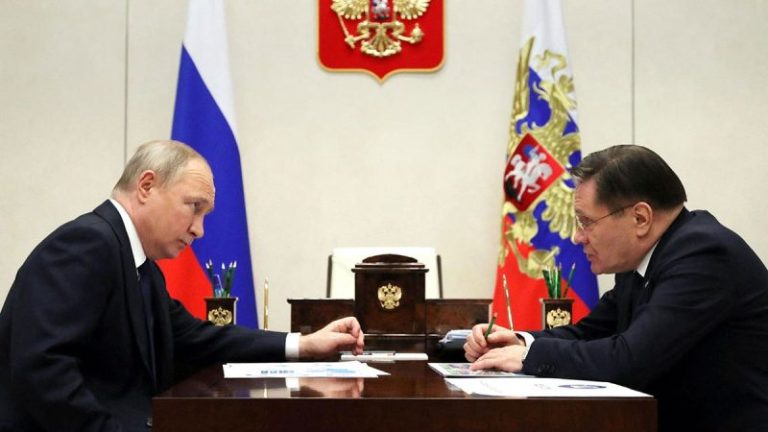
Russia’s top nuclear official this week said Moscow is facing ‘colossal threats’ and needs to update its nuclear capabilities.

Without directly naming where Russia’s chief nuclear threat is coming from, Director General of the State Atomic Energy Corporation Rosatom Alexei Likhachev said, ‘the current geopolitical situation, is a time of colossal threats to the existence of our country.’

‘Therefore, the nuclear shield, which is also a sword, is a guarantee of our sovereignty,’ he added, according to Russian state news agency RIA. ‘We understand today that the nuclear shield must only be improved in the coming years.’

The comments came less than a week after Russian President Vladimir Putin and President Donald Trump convened for a face-to-face meeting that marked the first time a U.S. leader has met with the Kremlin chief since Russia invaded Ukraine in 2022. 

While Trump and Putin appeared positive following the talks, little seemed to have been concretely accomplished in the meeting and hope surrounding a Russia-Ukraine ceasefire appeared to decline as the week progressed. 

It is unclear why Likhachev issued comments regarding Russia’s nuclear program at this time, and he did not detail what sort of updates he would be looking to make to Moscow’s ‘shield’ program. 

Trump issued similar comments earlier this year when in May he announced his plans to develop the ‘Golden Dome’ missile defense system — inspired by Israel’s ‘Iron Dome’ defense system — and which is expected to cost at least $175 billion.

Though security experts have been sounding the alarm when it comes to China’s escalating nuclear development, together Russia and the U.S. continue to possess 90% of the world’s nuclear arsenal.

Moscow continues to hold nearly 4,400 nuclear warheads, over 1,500 of which are ‘strategically deployed’ while the U.S. possesses more than 3,700 warheads in its stockpiles with 1,400 deployed, according to the Arms Control Association. 

While nuclear disarmament was the standing international goal following the end of the Cold War, the trajectory of this policy remains dubious as relations between Washington and Moscow have once again turned precarious amid Putin’s war in Ukraine, and his burgeoning relationship with Chinese President Xi Jinping. 

The New Start Treaty remains the only bilateral nuclear arms control agreement between the U.S. and Russia, and though it was extended in 2021, it is set to expire in February 2026. The future of the treaty – first signed in 2010 – also remains unclear as Moscow paused its participation in the agreement in 2023.

Putin said that this suspension meant he would continue to abide by stockpile limits under the treaty, but he would not allow for continued U.S. inspections. 

Fox News Digital could not immediately reach the International Atomic Energy Agency (IAEA) for comment as nations increasingly look to expand their nuclear capabilities just six months ahead of when the New Start Treaty is set to expire. 

This post appeared first on FOX NEWS

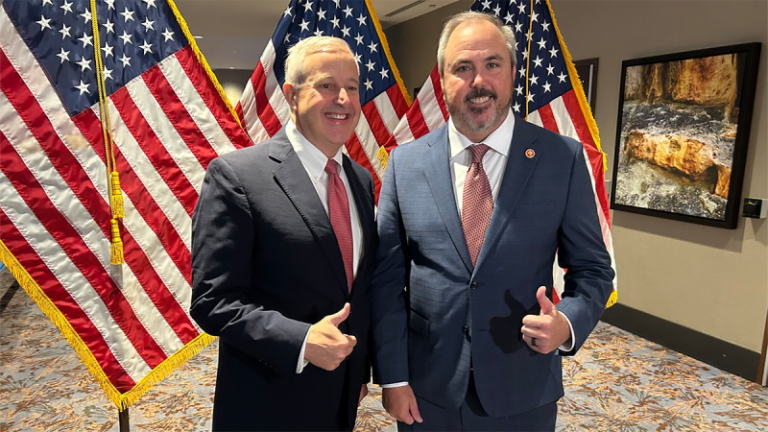
EXCLUSIVE – New Republican National Committee (RNC) chair Joe Gruters outlined his mission as he took over steering the GOP’s national party committee.

‘The midterms are ahead, where we must expand our major majority in the House, in the Senate, and continue electing Republicans nationwide,’ Gruters said as he addressed committee members moments after being unanimously elected chair at the RNC’s summer meeting, held this year in Atlanta, Georgia.

Gruters, a state senator and RNC committee member from Florida, who, until his election as chair on Friday, briefly served as the national party committee’s treasurer, is a longtime ally of President Donald Trump. His move to the RNC chairmanship cements Trump’s dominance over the GOP as it prepares for midterm battles next year.

And a month ago, Trump endorsed Gruters to succeed now-former RNC chair Michael Whatley, who stepped down as he runs for the Senate in battleground North Carolina in the blockbuster race to succeed retiring GOP Sen. Thom Tillis.

The ascension of Gruters to RNC chair is the latest sign of Trump’s complete control over the national party committee.

‘This is the president’s party. This is the president’s vision, overall. The party fully embraces the president,’ Gruters said as he and Whatley stood for an exclusive interview with Fox News Digital.

Whatley, who Trump picked to steer the RNC a year and a half ago, noted that ‘we have transformed the RNC, basically the way that President Trump has transformed the Republican Party.’

Gruters has been a major Trump supporter dating back to the president’s first campaign for the White House. Gruters served as Florida co-chair Trump’s 2016 campaign.

The Democratic National Committee, taking aim at Gruters following his election as chair, claimed that ‘Gruters and Trump will have a lot to bond over while they turn the Republican Party into even more of a personal propaganda machine for Trump.’

Republicans swept back to power last November, with Trump winning the White House, the GOP retaking control of the Senate and holding onto their fragile majority in the House.

But looking ahead to next year’s midterms, when the party in power traditionally faces political headwinds and loses House and Senate seats, the GOP will be defending their congressional majorities.

A key part of the RNC’s strategy going forward is Trump.

‘We’re gonna ride the president all the way to victory in the midterms, and we are going to win big,’ Gruters emphasized.

Asked about the top three items on his to-do list as he takes over as RNC chair, Gruters said, ‘number one, it’s still election integrity. That’s the most important thing, protecting the vote. And it’s about winning the midterms.’

‘It’s about going back to the fundamentals of registering voters and turning our voters out,’ the new chair added.

Gruters also highlighted Trump’s sweeping GOP-crafted domestic policy bill, which the Republican majorities in Congress passed this summer along near-party lines.

‘It’s our agenda,’ Whatley said in a Fox News Digital interview last month, as he pointed to the massive tax cuts and spending bill that Trump signed into law on July 4.

The measure is stuffed full of Trump’s 2024 campaign trail promises and second-term priorities on tax cuts, immigration, defense, energy and the debt limit. 

It includes extending the president’s signature 2017 tax cuts and eliminating taxes on tips and overtime pay. 

By making his first-term tax rates permanent – they were set to expire later this year – the bill will cut taxes by nearly $4.4 trillion over the next decade, according to analysis by the Congressional Budget Office and the Committee for a Responsible Federal Budget. 

The measure also provides billions for border security and codifies the president’s controversial immigration crackdown.

And the new law also restructures Medicaid – the almost 60-year-old federal program that provides health coverage to roughly 71 million low-income Americans. 

The changes to Medicaid, as well as cuts to food stamps, another one of the nation’s major safety net programs, were drafted in part as an offset to pay for extending Trump’s tax cuts. The measure includes a slew of new rules and regulations, including work requirements for many of those seeking Medicaid coverage.

Democrats, for months, have repeatedly blasted Republicans over the social safety net changes. And they’ve spotlighted a slew of national polls conducted both  before and after the measure was passed into law, that indicate the bill’s popularity in negative territory.

But Gruters sees the new law as campaign ammunition.

‘Every single Democrat in Congress voted for a tax increase on average everyday Americans,’ Gruters argued. ‘And that big, beautiful bill has something for every single American, whether you’re working class, whether you’re a small business owner, everybody benefits, and we’re going to be able to ride that bill all the way to victory.’

This post appeared first on FOX NEWS

ROCHESTER, Minnesota, Aug 22 (Reuters) – U.S. farmers will harvest a record corn crop in 2025 after ideal weather across much of the Midwest this summer, but the bounty will fall short of the U.S. government’s lofty outlook as pockets of plant disease and heat stress dented yields in spots across the farm belt, crop consultancy Pro Farmer said on Friday.

Growers are also expected to reap a bumper soybean crop, although dry conditions in parts of the eastern Midwest and pockets of disease pressure in Iowa may limit yield potential, Pro Farmer said after its annual four-day tour across seven top-producing states this week.

The United States is the world’s top corn exporter and No. 2 soybean exporter, and favorable weather in most of the main growing states supported crops but pushed futures prices to recent multi-year lows.

The warm and wet conditions that fueled crop growth also fostered fungal diseases such as tar spot, southern rust and northern blight in corn, and sudden death syndrome in soybeans.

“Each day we’ve noted the disease pressure in corn. Tar spot, southern rust more widespread than we’ve ever seen before. Those are going to be some real yield robbers,” said Lane Akre, Pro Farmer economist and one of the leaders of the tour’s eastern leg.

Pro Farmer projected 2025 U.S. corn production at a record 16.204 billion bushels, with an average yield of 182.7 bushels per acre, and soybean production at 4.246 billion bushels, with an average yield of 53.0 bpa.

The outlook is below the U.S. Department of Agriculture’s latest forecast for corn production at a record 16.742 billion bushels with yields averaging 188.8 bpa, and soybean production at 4.292 billion bushels with record average yields of 53.6 bpa.

Crop scouts on the Pro Farmer tour saw more disease-hit fields than normal across the Midwest farm belt this week, although it is not yet clear whether these diseases will blow up into significant yield loss.

At one stop in northwest Illinois, the corn field appeared healthy and green from the roadside, but 30 to 40 steps in, leaves were streaked with rust, leaving crop scouts covered in color. Overhead, bright yellow crop dusters banked low as they sprayed wide white plumes of fungicide.

Jake Guse, a Minnesota row crop farmer and crop scout on the eastern leg of the tour, said disease levels were the worst and most widespread that many crop scouts had ever seen on the tour.

“As we traveled across Indiana, we started seeing more (disease). In Illinois, started getting bad — and it was all over Iowa,” Guse said of three of the largest producing states.

However, crop scouts also found exceptional yield prospects that could help cushion any disease-related yield decline.

The strong production prospects may not be welcome news to farmers, who are facing a third straight year of declining corn prices due to excess supplies and only a modest improvement in soybean prices, according to USDA data.

Production costs remain high while trade tensions with key markets like China, the top soybean importer, have left demand uncertain.

While the USDA is forecasting that the nation’s farm economy will improve in 2025, that boost will largely come from a massive influx of federal funding the Trump administration plans to send to rural America, according to USDA data.

Corn and soybean futures on the Chicago Board of Trade firmed this week as reports from the crop tour suggested that recent USDA harvest forecasts may be too high.

The benchmark CBOT December corn contract CZ25 ended the week up 1.5%, its first weekly gain in a week in five weeks, while November soybeans SX25 also rose 1.5% and hit a one-month high.

This post appeared first on NBC NEWS

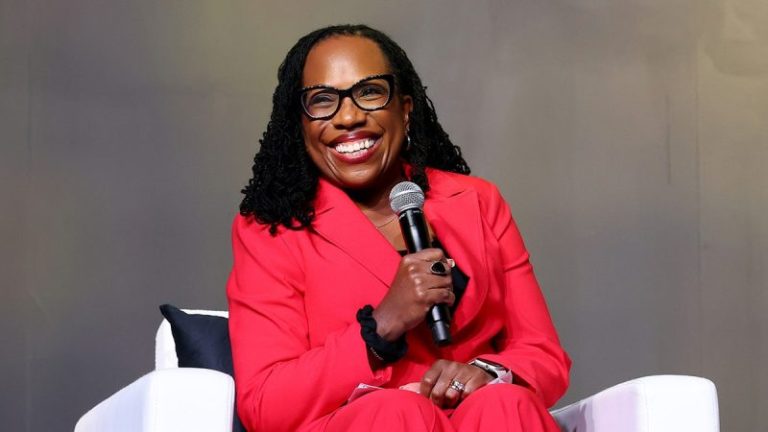
Justice Ketanji Brown Jackson criticized on Thursday what she said were the ‘recent tendencies’ of the Supreme Court to side with the Trump administration, providing her remarks in a bitter dissent in a case related to National Institutes of Health grants.

Jackson, a Biden appointee, rebuked her colleagues for ‘lawmaking’ on the shadow docket, where an unusual volume of fast, preliminary decision-making has taken place related to the hundreds of lawsuits President Donald Trump’s administration has faced.

‘This is Calvinball jurisprudence with a twist. Calvinball has only one rule: There are no fixed rules. We seem to have two: that one, and this Administration always wins,’ Jackson wrote.

The liberal justice pointed to the Oxford English Dictionary’s definition of Calvinball, which describes it as the practice of applying rules inconsistently for self-serving purposes.

Jackson, the high court’s most junior justice, said the majority ‘[bent] over backwards to accommodate’ the Trump administration by allowing the NIH to cancel about $783 million in grants that did not align with the administration’s priorities.

Some of the grants were geared toward research on diversity, equity and inclusion; COVID-19; and gender identity. Jackson argued the grants went far beyond that and that ‘life-saving biomedical research’ was at stake.

‘So, unfortunately, this newest entry in the Court’s quest to make way for the Executive Branch has real consequences, for the law and for the public,’ Jackson wrote.

The Supreme Court’s decision was fractured and only a partial victory for the Trump administration.

In a 5-4 decision greenlighting, for now, the NIH’s existing grant cancellations, Chief Justice John Roberts sided with the three liberal justices. In a second 5-4 decision that keeps a lower court’s block on the NIH’s directives about the grants intact, Justice Amy Coney Barrett, a Trump appointee, sided with Roberts and the three liberals. The latter portion of the ruling could hinder the NIH’s ability to cancel future grants.

The varying opinions by the justices came out to 36 pages total, which is lengthy relative to other emergency rulings. Jackson’s dissent made up more than half of that.

George Washington University law professor Jonathan Turley observed in an op-ed last month a rise in ‘rhetoric’ from Jackson, who garnered a reputation as the most vocal justice during oral arguments upon her ascension to the high court.

‘The histrionic and hyperbolic rhetoric has increased in Jackson’s opinions, which at times portray her colleagues as abandoning not just the Constitution but democracy itself,’ Turley said.

Barrett had sharp words for Jackson in a recent highly anticipated decision in which the Supreme Court blocked lower courts from imposing universal injunctions on the government. Barrett accused Jackson of subscribing to an ‘imperial judiciary’ and instructed people not to ‘dwell’ on her colleague’s dissent.

Barrett, the lone justice to issue the split decision in the NIH case, said challenges to the grants should be brought by the grant recipients in the Court of Federal Claims.

But Barrett said ‘both law and logic’ support that the federal court in Massachusetts does have the authority to review challenges to the guidance the NIH issued about grant money. Barrett joined Jackson and the other three in denying that portion of the Trump administration’s request, though she said she would not weigh in at this early stage on the merits of the case as it proceeds through the lower courts.

Jackson was dissatisfied with this partial denial of the Trump administration’s request, saying it was the high court’s way of preserving the ‘mirage of judicial review while eliminating its purpose: to remedy harms.’

This post appeared first on FOX NEWS

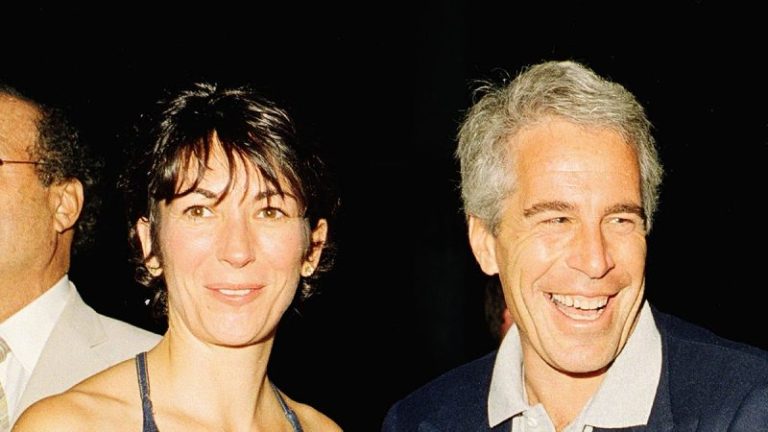
Hours of interviews between Jeffrey Epstein associate Ghislaine Maxwell and a federal prosecutor were released by the Department of Justice on Friday afternoon. 

During the recorded sessions in which the convicted sex offender, who was found guilty for her role in Epstein’s crimes, was granted immunity, she made several interesting claims. 

Here are 10 top takeaways. 

Claims there is no client list

Maxwell denied the existence of a black book with Epstein’s clients on it – and least to her knowledge. 

‘There is no list,’ she told Deputy Attorney General Todd Blanche. 

Maxwell said she believed the origin of rumors that there was a list came in 2009 after Epstein had finished a 13-month sex trafficking sentence in Florida, and a lawyer at Rothstein Adler involved in a civil suit against him called the FBI to say he had a ‘piece of evidence’ that belongs to Epstein.

That was ‘the list,’ she claimed, adding that she believes he became a confidential informant to the FBI.

She said he obtained the list through a sting operation involving Epstein’s former butler, who said in a deposition he had ‘handwritten notes, or a journal, whatever.’ 

Doesn’t believe Epstein killed himself

Maxwell said she doesn’t believe Epstein killed himself when he was found hanging in his New York jail cell in 2019. 

‘I do not believe he died by suicide, no,’ she told Blanche when asked. 

She added that she didn’t have any speculation about who could have killed him, but claimed the U.S. Bureau of Prisons is rife with mismanagement. 

‘If it is indeed murder, I believe it was an internal situation,’ she said, adding she didn’t believe his death was a way to silence him. 

‘I do not have any reason to believe that,’ she told Blanche. ‘And I also think it’s ludicrous because if that – I also happen to think if that is what they wanted, they would’ve had plenty of opportunity when he wasn’t in jail. And if they were worried about blackmail or anything from him, he would’ve been a very easy target.’

Never saw President Donald Trump do anything inappropriate

Maxwell said while she believes President Trump (before he was president) and Epstein were friendly, she didn’t think they were ‘close.’

‘I think they were friendly, like people are in social settings. I don’t — I don’t think they were close friends or I certainly never witnessed the president in any of — I don’t recall ever seeing him in his house, for instance.’ she said. ‘I actually never saw the president in any type of massage setting.’

She added, ‘I never witnessed the president in any inappropriate setting in any way. The president was never inappropriate with anybody. In the times that I was with him, he was a gentleman in all respects.’ 

Former President Bill Clinton never went to Epstein’s island 

Maxwell claimed that former President Bill Clinton, whose name has previously been linked to Epstein, ‘absolutely never went’ to Epstein’s Caribbean island where sex trafficking of young girls took place. 

She added, ‘I can be sure of that because there’s no way he would’ve gone – I don’t believe there’s any way that he would’ve gone to the island, had I not been there. Because I don’t believe he had 16 an independent friendship, if you will, with Epstein.’ 

She also said that Clinton was her friend, not Epstein’s, and that she knew him through the Clinton Global Initiative and was part of the inception of the organization. 

Calls Epstein ‘disgusting,’ but doesn’t believe he’s guilty of everything he was accused of 

Maxwell called Epstein ‘disgusting’ in the interview but said she doesn’t believe he was guilty of all the accusations. 

‘I do believe that Epstein did a lot of, not all, but some of what he’s accused of, and I’m not here to defend him in any respect whatsoever,’ Maxwell told Blanche. ‘I don’t want to, and I don’t think he requires, nor deserves any type of protection or – from me in any way, to sugarcoat what he did or didn’t do.’

She added, ‘This is one man. He’s not some – they’ve made him into this – he’s not that interesting. He’s a disgusting guy who did terrible things to young kids.’

Never saw Prince Andrew do anything inappropriate and believes the photo of him with accuser Virginia Giuffre is fake

Maxwell told Blanche that she also never saw Prince Andrew do anything inappropriate while she was with him, adding that she believes the infamous photo of the prince with his hand around accuser Virginia Giuffre when she was 17 isn’t real. 

‘I believe it’s literally a fake photo,’ she said of the picture, purported to have been taken at her former London townhouse. ‘I do not know that they met.’

Giuffre died of suicide earlier this year. She had accused the royal of forcing her into sex inside Maxwell’s home in London’s ritzy Belgravia neighborhood. The prince was relieved of his royal duties amid fallout from the scandal but has always denied allegations of wrongdoing. He agreed to pay Giuffre an undisclosed settlement in 2022 and to donate to her charity for crime victims.

Maxwells claims she has memory problems after being on suicide watch for 2 years

Maxwell claimed to Blanche her ‘memory’s not as good as it was’ because she was kept on suicide watch at the Metropolitan Detention Center in Brooklyn after her arrest for nearly two years, and she was woken up every 15 minutes. 

She said because of her memory lapses she had taken notes before the interviews, and throughout the interview still struggled to recall many details. 

Claims Epstein had a heart condition and told her he couldn’t have sex often

Maxwell said that when she traveled with Epstein, they slept in the same bed, but he told her he had a heart condition and couldn’t have sex frequently. 

‘Which meant that he didn’t have intercourse a lot, which suited me fine, because I actually do have a medical condition, which precludes me having a lot of intercourse,’ she told Blanche. 

She added that she didn’t know the exact nature of the condition, but he liked ‘other forms of sexual activities.’

Claims Epstein never loved her and said she wasn’t his type and that he told people to lie to her 

Maxwell told Blanche she and Epstein had a friends with benefits relationship while she was working with him, but at one point Epstein said that one of his associates didn’t want to be seen with her too much because of her father’s company’s embezzlement accusations. 

But she said she believed that was all a ruse just to keep her from traveling with Epstein. 

‘Today – not contemporaneously, but today I don’t believe that that’s even true. I think it was used as a means to not have me travel with him to Ohio or whatever. It was just a way to park me,’ she said.

She added that after her arrest during the legal discovery process she saw evidence that ‘he would actively tell other people to lie to me or conceal things from me, and that he never loved me and I wasn’t his type.’ 

Claims Epstein took testosterone, which altered his character 

Maxwell also claimed that in the late ‘90s, Epstein started taking testosterone, ‘and that altered his character.’

While discussing the frequency at which he got sexual massages, she said the testosterone both made him more ‘aggressive’ and she thought it likely ‘altered his desires.’

Maxwell is serving a 20-year prison sentence for sex trafficking of minors. 

This post appeared first on FOX NEWS

Cracker Barrel Old Country Store, the chain of southern-style restaurants with a gift shop that lines highways across America, has gotten a makeover. Their logo has lost the ‘Old Country Store’ tagline, as well as the iconic man in a chair resting his arm on a barrel in favor of the words Cracker Barrel in text only. Inside, per patron videos of remodeled locations, gone is the dark nostalgic feel replaced with a sterile renovation. The knick-knacks have gone from quirky kitsch from yesteryear to something you might see in a suburban craft store. 

While the company’s CEO has said that initial reaction to these changes was positive, the verdict across social media was very much the opposite. The new look removes the old-school charm and character that was central to the brand’s identity for decades. 

Cracker Barrel is just the latest in a string of companies, including Jaguar more recently and even Coca-Cola in the mid-’80s with their New Coke rollout, to violate the critical principle of making sure that you do not alienate your loyal customer base. 

I wear many hats in business and have more than 20 years of experience as an advocate for loyal customers and clients in business, working in an outsourced CCO (Chief Customer Officer) function and sharing my proprietary customer loyalty models via speeches and consulting with both the biggest companies in the world and a variety of small and mid-sized businesses. And I firmly believe that one of a company’s most important assets isn’t listed on its balance sheet: the company’s loyal customers. 

Loyal customers are easier to sell more to, both in frequency of purchases and upsells, because they already love your business and have often given you permission to communicate with them and build a relationship. They are also excellent advocates for generating new business via their own advertising efforts — word of mouth, posts on social media and more. 

While it is a challenge for companies to continually grow, and publicly traded companies are under even more pressure to do so, mathematically, growth becomes harder if you are losing customers from your key customer base. 

If you make your customers believe you do not care about them and their relationship with your brand and company, it is going to be very difficult for you to be successful in your business. This is the stark reality many businesses who have sought out new customers have faced lately. It’s fine to reach new customers, but you must do it carefully and in a way that doesn’t simultaneously burn goodwill with your existing customers. 

New customers should never be treated better or given more weight than existing, loyal customers. 

In my own social media post resharing a video of a Cracker Barrel dining room remodel, I received thousands of interactions. Among the majority comments from long-time customers expressing their displeasure at the changes, one other comment stood out. The poster said, ‘I don’t eat there but it looks nice to me.’ 

And that is the crux of the issue. The poster is not a customer, and based on the comment, is not likely to become a customer. So, seeking her approval is not a revenue-enhancing win for the company. Maybe it gets some ROE (return on ego) points for the marketing team, but it doesn’t get ROI (return on investment) for shareholders.  

For Cracker Barrel, losing character in a time when corporatization is making everything around us bland and soulless feels like something enjoyable from the past is being killed off. And for a brand which has been based on nostalgia — from their décor to their nostalgic candy and wares in their adjacent store — it doesn’t make a lot of sense.  

I am a long-time Cracker Barrel patron. I stop in whenever I am on the road. And as a long-time customer, as well as business advisor and executive, I can tell you that Cracker Barrel’s logo was not their issue.  

My last stop in was in June on a road trip. I noted that I hadn’t been there in a while prior, because I hadn’t been on the road much. And in a moment where convenience is a part of the equation and DoorDash has taken hold of younger generations, it is harder to get touchpoints with a brand, even if you want them. This is a much bigger strategic endeavor that Cracker Barrel needs to think through. 

My other issue was the menu. They had taken off my favorite item and their hashbrown casserole tasted off — the food overall wasn’t as fresh as I had experienced in the past. In my social media post, there were several comments about a decline in food quality over recent years. Making the menu and food quality rock-solid is critical for a restaurant, particularly when consumers are trying to stretch their dollars. 

Cracker Barrel isn’t the first and certainly won’t be the last company to fall into the trap of thinking that all change is good. Companies should be bringing their customer voices to the table, which can be accomplished with a CCO whose job it is to know the customers well and advocate for them within the company or other loyalty specialist advising.  

Loyalty is hard to build and easy to lose. Companies always want to attract new customers, but that isn’t effective if relationships with existing customers aren’t nurtured at the same time. 

This post appeared first on FOX NEWS