Author

admin

Browsing

Sen. Bernie Sanders, I-Vt., is demanding that Health and Human Services Secretary Robert F. Kennedy Jr. resign after multiple senior officials at the Center for Disease Control and Prevention departed the agency.

The Trump administration announced the removal of CDC Director Susan Monarez earlier this week, less than a month after she was confirmed, after she refused Kennedy’s directives to adopt new limitations on the availability of some vaccines, including for approvals for COVID-19 vaccines.

Four other senior CDC officials resigned in protest after Monarez’s ouster, pointing, in part, to anti-vaccine policies pushed by Kennedy. Hundreds of workers at the agency also walked out of the CDC’s headquarters in Atlanta in support of their former colleagues.

In response to the departures, Sanders wrote in an op-ed for The New York Times that Kennedy is ‘endangering the health of the American people now and into the future’ and accused the secretary of firing Monarez because she refused ‘to act as a rubber stamp for his dangerous policies.’

‘Despite the overwhelming opposition of the medical community, Secretary Kennedy has continued his longstanding crusade against vaccines and his advocacy of conspiracy theories that have been rejected repeatedly by scientific experts,’ Sanders wrote in the piece published Saturday.

‘It is absurd to have to say this in 2025, but vaccines are safe and effective,’ he added. ‘That, of course, is not just my view. Far more important, it is the overwhelming consensus of the medical and scientific communities.’

Sanders also noted that vaccines for diseases like polio and COVID-19 have saved hundreds of millions of lives around the world.

Sanders, the ranking member of the Senate’s health committee, opposed Kennedy’s confirmation earlier this year. The secretary was sworn in back in February. Deputy HHS Secretary Jim O’Neill was selected to be the acting director of the CDC after Monarez’s termination.

The Trump administration has defended Monarez’s ouster, with White House press secretary Karoline Leavitt saying Thursday the president has the ‘authority to fire those who are not aligned with his mission.’

‘The president and Secretary Kennedy are committed to restoring trust and transparency and credibility to the CDC by ensuring their leadership and their decisions are more public-facing, more accountable, strengthening our public health system and restoring it to its core mission of protecting Americans from communicable diseases, investing in innovation to prevent, detect and respond to future threats,’ Leavitt told reporters.

Sanders earlier this week called for an investigation into Monarez’s ouster, criticizing the move as ‘reckless’ and ‘dangerous.’

In the op-ed, he wrote that Kennedy ‘has profited from and built a career on sowing mistrust in vaccines,’ adding that the secretary is now ‘using his authority to launch a full-blown war on science, on public health and on truth itself.’ 

He also said it will become harder for Americans to obtain ‘lifesaving vaccines’ with Kennedy leading HHS.

‘The danger here is that diseases that have been virtually wiped out because of safe and effective vaccines will resurface and cause enormous harm,’ Sanders wrote, stressing that the U.S. needs to be better prepared in the case of another pandemic.

‘Secretary Kennedy is putting Americans’ lives in danger, and he must resign,’ Sanders wrote. ‘In his place, President Trump must listen to doctors and scientists and nominate a health secretary and a C.D.C. director who will protect the health and well-being of the American people, not carry out dangerous policies based on conspiracy theories.’

Fox News Digital reached out to HHS for comment.

Reuters contributed to this report.

This post appeared first on FOX NEWS

The Israel Defense Forces said on Saturday that it had killed the Houthi prime minister and several other senior officials in a strike in Yemen. 

‘Houthi Prime Minister, Ahmed Al-Rahawi, along with additional senior officials of the Houthi terrorist regime were eliminated during an IDF strike in Sanaa, Yemen,’ the IDF said in a social media post.

The IDF said it had targeted a Houthi site where officials responsible ‘for the use of force, the military buildup of the Houthi terror regime, and the advancement of terror actions against Israel. The IDF will continue to target all threats against Israeli civilians.’ 

The airstrike was conducted by the Israeli Air Force Thursday using intelligence gathered by the IDF. 

‘The strike was made possible by seizing an intelligence opportunity and completing a rapid operational cycle, which took place within a few hours,’ the IDF said. 

A Houthi statement confirmed Al-Rahawi’s death. 

It was Israel’s second strike against the Houthis in Yemen in a week. 

On Sunday, Israel hit Yemen’s capital in response to missiles fired by the Houthis. The attack killed six people and wounded 86 others, according to Reuters, which cited a Houthi Health Ministry spokesperson.

‘As we warned the Houthis in Yemen: ‘After the plague of darkness comes the plague of the death,’’ said Israeli Defense Minister Israel Katz, who was in the IDF central command during the attack. ‘Whoever raises a hand against Israel, their hand will be cut off.’

The IDF previously said the Houthis were operating under Iran’s direction to harm Israel and its allies. The IDF also blamed the Houthis for ‘undermining regional stability and disrupting global freedom of navigation.’ 

The strikes Thursday were launched after Israel intercepted two drones from Yemen and happened during a speech by Houthi leader Abdul-Malik Badreddin al-Houthi, according to YNet. Additionally, the Israeli outlet reported that the speech went on without interruption.

The conflict between Israel and the Houthis has gone on for nearly two years. 

The Iran-backed terror force threatened to strike Israel just days after Hamas’ Oct. 7 massacre. Within weeks of Hamas’ attacks, the Houthis shot missiles and drones at Israel that were intercepted by U.S. forces aboard the USS Carney.

The Houthis have continued to attack Israel in support to Hamas. 

The Associated Press contributed to this report. 

This post appeared first on FOX NEWS

For Dyan Cannon, age is more than just a number.

The ‘Heaven Can Wait’ actress, 88, attempted to go inside the White House this week, but as she and her friends documented in a video shared on social media, the Secret Service refused to let her enter because of an age discrepancy on her passport.

Cannon, along with fellow actresses Kym Douglas and Tracey Bregman and TV personality and chef Christine Avanti-Fischer, traveled to Washington, D.C., together recently. The group hosts a new podcast, ‘God’s Table.’ 

They went out to do some sightseeing, but there was a hiccup in their plans.

‘We are lined up for a great tour, and we have these Secret Service guys and all of the federal agents. We can’t get in because someone lied about their age,’ Douglas, who filmed the video, explained.

Cannon laughed throughout the explanation as Bregman and Avanti-Fischer teased her.

‘Listen,’ Cannon said. ‘Years ago, here’s the thing, I lied about my age on my passport.’


View this post on Instagram


‘Who doesn’t, Dyan?’ Douglas joked.

Avanti-Fischer remarked, ‘If we get in, it’s going to be a miracle of God.’

The video was originally shared by Douglas on her Instagram story Thursday, but Cannon reposted it to her own page, writing in her caption, ‘And I’d do it again.’

She added, ‘It’s nobody’s business what the number is they’ve pinned on me ….right girls? Right guys? it’s just a blinkin number… no matter what number they put next to me there’s one thing that never changes …I WUV WU’

Bregman commented on the post, writing, ‘Hilarious. Love you so but seriously, how can I change my age.’

Cannon has been a force in the entertainment industry for decades. She got her start in show business by appearing in various TV shows in the 1950s, and, in 1962, she appeared in her first Broadway show.

Her breakthrough role came in 1969, when she appeared in ‘Bob & Carol & Ted & Alice,’ a role that earned her her first Academy Award nomination.

She was later nominated for the award for best live action short film for 1976’s ‘Number One,’ which she produced. This nod made her the first woman nominated for an Oscar for her work in front of and behind the camera.

Cannon has also had a storied love life, which included marrying legendary actor Cary Grant in 1965. The couple welcomed one daughter, Jennifer, before divorcing in 1968.

She got married a second time in 1985 to real estate investor Stanley Fimberg, but the couple split in 1991. She also had what she once called a ‘love affair’ with Johnny Carson.

Earlier this year, she told People that ‘of course’ she’s still dating.

She told the outlet she was seeing ‘somebody very special,’ then clarified that she was actually seeing ‘several special [people]. … I have friends with benefits, yes.’

This post appeared first on FOX NEWS

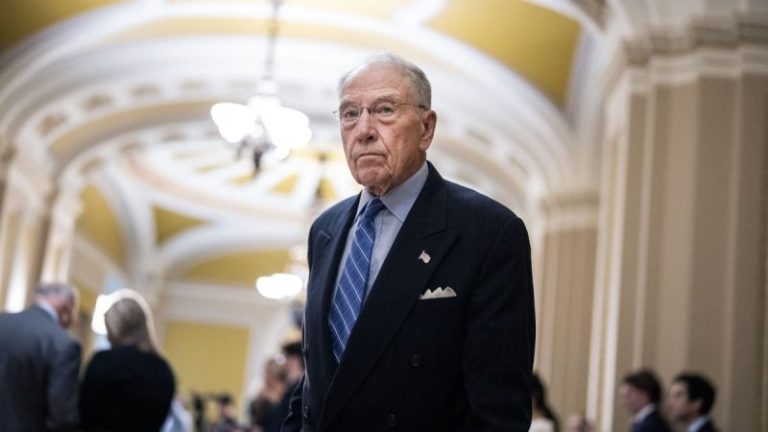
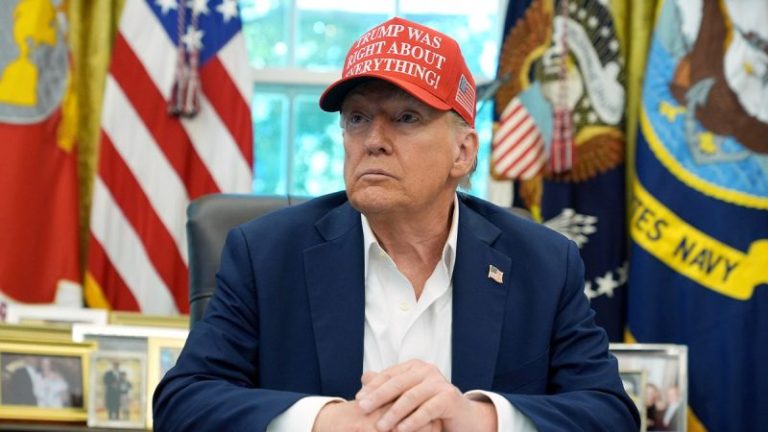
President Donald Trump has attacked the Senate for blocking his preferred nominees from being confirmed to key positions, but lawmakers and people familiar with the process say the Senate is not necessarily to blame.

Trump has faulted the Senate’s ‘blue slip’ tradition, an unwritten rule requiring nominees for judge, U.S. attorney and U.S. marshal to obtain home state senators’ approval prior to being confirmed.

He said blue state senators will only greenlight ‘Democrats or maybe weak Republicans.’ The president called on Sen. Chuck Grassley, R-Iowa, chairman of the Senate Judiciary Committee, to abolish the practice, and he threatened to sue over it.

But Grassley and other Republicans are unbudging in their position that blue slips are an indispensable part of the confirmation process. Blue slips have been used for more than a century. Past presidents have gotten many nominees confirmed under the system, suggesting other factors are contributing to Trump’s struggle to secure blue slips from Democrats.

Trump threatens to sue over ‘gentlemen’s agreement’

Trump and his allies escalated attacks on the blue slip process this week, accusing Grassley of blocking nominees by maintaining it.

‘This is because of an old and outdated ‘custom’ known as a BLUE SLIP, that Senator Chuck Grassley, of the Great State of Iowa, refuses to overturn,’ Trump wrote on Truth Social.

The president threatened to sue over what he said was a ‘gentlemen’s agreement,’ though it is unclear whom the government would sue and on what grounds.

‘It’s not based on law, and I think it’s unconstitutional, and I’ll probably be filing a suit on that pretty soon,’ Trump told reporters in the Oval Office.

Asked about the possible lawsuit and why Trump’s nominees in blue states are struggling with confirmation, the White House told Fox News Digital in a statement the holdup must be addressed.

‘Senate Democrats have led a campaign of historic obstruction against President Trump and his nominees,’ White House spokeswoman Abigail Jackson said. ‘The left’s partisan, obstructionist agenda is only hurting the American people and it must end.’

‘Troubling’ pattern of circumventing Senate

Trump appointed his former personal defense lawyer Alina Habba as ‘interim’ U.S. attorney, which carries a 120-day term limit that federal judges have the ability to extend under federal vacancy laws if no one has been confirmed by the Senate to the position by then.

Judges have opted to extend Trump’s nominees, like in Jay Clayton’s case in the Southern District of New York. But in an unusual move, the federal judges of New Jersey rejected Habba.

The judges selected someone else, whom Trump and Attorney General Pam Bondi promptly fired. Trump and Bondi then used a series of legal maneuvers to reinstall Habba to another temporary term, but a federal judge ruled the moves unconstitutional. The Trump administration is appealing that decision in a case that could now make its way to the Supreme Court and force the justices to weigh in on what has become a pattern of Trump end-running around the Senate.

John Sarcone in the Northern District of New York faced a situation similar to Habba’s, and he is now serving as ‘acting’ U.S. attorney. Bill Essayli in the Central District of California, who has taken on a vocal pro-Trump stance amid high-profile deportation cases in his district, has also transitioned from ‘interim’ to ‘acting’ U.S. attorney. Acting U.S. attorneys also carry a temporary term of 210 days. It is unclear how Trump will proceed once those terms expire.

Carl Tobias, University of Richmond law professor, said the workarounds defy the spirit of the Constitution, which says nominees must be confirmed ‘with the advice and consent’ of the Senate.

‘It’s good to have that scrutiny from the Judiciary Committee and then on the floor, and so hopefully they could return to something like that, but I’m not sure that’s going to happen, and so I think it is troubling,’ Tobias told Fox News Digital.

How to get a blue slip from the other party

The administration must engage with the Senate during the nomination process, including by consulting early on with home state senators about possible nominees.

Former President Joe Biden secured blue slips from opposing parties for 49 nominees, including 27 U.S. attorneys, while Trump’s first administration was able to secure confirmations for nearly all the U.S. attorneys the president nominated.

The blue slip, to senators, is a crucial negotiating tool, one that Article III Project founder Mike Davis said is not going away, despite Trump’s intensifying objections to it. Davis, a staunch Trump supporter, served as counsel to the Senate Judiciary Committee and oversaw nominations under Grassley in the prior Trump administration.

‘It’s not going away. Why would it? Why would senators give up their power? They’re not going to do it,’ Davis told Fox News Digital, adding that blue slips to the Senate are ‘the sacred china that’s never going to get broken.’

The vetting process

Nominees must also provide the Senate Judiciary Committee with a questionnaire, an FBI background check and financial disclosures. A source familiar with the process told Fox News Digital the committee did not receive Habba’s paperwork to begin vetting her. 

Habba has said she could not begin the process because Democratic Sens. Cory Booker and Andy Kim of New Jersey, would not give blue slip approval. It is unclear if and when the Trump administration approached the pair of senators about Habba. 

Habba, like Trump, blamed Grassley.

‘The blue slip TRADITION prevents a nominee from getting to the point of making that case to the committee and Senate floor. You know who can get rid of it? YOU @ChuckGrassley,’ Habba wrote on X.

She told Grassley ‘this is a time for leadership, not deflection’ and that the chairman should not be ‘doing the dirty work of Thom Tillis, Corey Booker and Andy Kim.’

Booker’s and Kim’s offices did not respond to a request for comment.

Grassley defends bipartisanship

Grassley went on a tear on social media this week, defending his decision to maintain blue slips, which the committee chair has discretion over.

‘U.S. Atty/district judge nominee without a blue slip does not hv the votes to get confirmed on the Senate floor & they don’t hv the votes to get out of cmte,’ the 91-year-old senator wrote. ‘As chairman I set Pres Trump noms up for SUCCESS NOT FAILURE.’

Sen. Thom Tillis, R-N.C., who is among several Republicans who will not vote for a nominee who has not been approved by home state senators, pointed to a statement on social media when asked for comment by Fox News Digital.

‘Chairman Grassley is a principled conservative who wants to keep radical liberals off the bench. Getting rid of the blue slip is a terrible, short-sighted ploy that paves the path for Democrats to ram through extremist liberal judges in red states over the long-term,’ Tillis wrote on X.

Are Democrats to blame?

Trump has thus far secured opposing party blue slips for four nominees. Davis said Trump is facing a unique level of obstruction from Democrats.

‘Every White House does what it can to engage the opposition party, but Democrats have made it clear they’re not interested in working with President Trump, so it’s understandable that his focus has been elsewhere for now,’ Davis said.

Senate Minority Leader Chuck Schumer, D-N.Y., for instance, has refused to give a blue slip to Clayton, the former Securities and Exchange Commission chairman. But Clayton’s ability to win the vote of the federal judges in the Southern District of New York has allowed him to serve as U.S. attorney without confirmation.

Sen. Dick Durbin, D-Ill., Senate Judiciary Committee ranking member, has further complicated the confirmation process by putting a hold on U.S. attorney nominees, which drastically slows, but does not fully block, the process.

Vice President JD Vance, then a senator, did the same for Biden’s nominees toward the end of the last administration.

Trump’s fight with the upper chamber is likely to evolve, especially as higher courts weigh in on Habba’s nomination, which is currently invalid, according to the district court judge’s decision this month. The U.S. Court of Appeals for the Third Circuit has set a briefing schedule in the case that stretches through October, but eventually the Supreme Court could also chime in on whether Trump’s manner of sidestepping the Senate is constitutional. 

This post appeared first on FOX NEWS

The gold price was on the rise this week, breaking through US$3,400 per ounce once again.

It’s been pushed higher by US dollar weakness, as well as Federal Reserve turmoil.

President Donald Trump has been pressuring Fed Chair Jerome Powell to cut interest rates for months, and on Monday (August 25) the situation developed further when Trump posted a letter on his social media platform Truth Social. In it, he said he was removing Lisa Cook from her position on the central bank’s board of governors due to allegations of mortgage fraud.

Cook, who has been voting to hold rates steady, was due to serve until 2038; she has now filed a lawsuit asking for Trump’s order to be declared ‘unlawful and void.’

The move has spurred questions about whether Trump can actually fire her — while the Federal Reserve Act doesn’t allow him to remove Fed officials at will, he can do so ‘for cause.’

For its part, the Fed has said it will abide by any court decision.

The situation is still developing, and gold market watchers are keeping a close eye on how it plays out. The yellow metal tends to fare better when interest rates are low, and some experts believe that a rate cut from the Fed could kick off its next move higher

The Fed’s next meeting is scheduled to run from September 16 to 17. Expectations are high that it will cut rates at that time, even though the latest data shows that its preferred measure of inflation, the personal consumption expenditures (PCE) price index, was up 2.6 percent year-on-year in July.

Core PCE, which excludes food and energy, saw a rise of 2.9 percent.

Bullet briefing — US drafts new critical minerals list, uranium miners make cuts

US drafts new critical minerals list

The US Department of the Interior has released a new draft critical minerals list, and the recommended additions include silver, as well as potash, silicon, copper, rhenium and lead.

Silver’s potential inclusion is turning heads in the mining community as market participants assess the potential impact for the metal. The critical minerals list is designed to guide federal strategy, investment and permitting deals as the US works to lock down supply of key commodities, meaning that silver-focused companies could see benefits such as tax breaks and faster timelines.

In total, the draft list has 54 minerals, with 50 included based on results from an economic effects assessment. Three were selected on the back of a qualitative evaluation, and zirconium is there because of the potential for a single point of failure in the US supply chain.

The list was set up after a 2017 executive order from Trump and is updated every three years.

It’s worth noting that silver and the other recommended additions aren’t officially critical minerals yet — the draft critical minerals list was posted for public comment on Tuesday (August 26), and feedback will be accepted for 30 days. It’s also worth noting that two commodities may be stripped of their critical mineral status — arsenic and tellurium have been recommended for removal.

Critical minerals lists vary from country to country based on individual needs, although in many cases they have similarities. In January 2024, a group of silver industry participants, including many major miners, sent a letter to Canada’s energy and natural resources minister proposing that silver be included in the nation’s critical minerals list; to date, it has not been added.

Uranium miners cut production guidance

Sweden’s government has proposed the removal of the country’s ban on uranium mining as it looks to reduce its reliance on imports of the energy fuel.

Uranium mining has been banned in Sweden since 2018, but the country has six operating reactors and generates around one-third of its power from nuclear energy.

The ban is set to be removed on January 1, 2026, and comes as nations increasingly look to nuclear power to fill their energy needs. It also comes amid supply questions — although demand is rising and prices are out of a years-long slump, miners have been slow to ramp back up post-Fukushima.

Just last week, Kazatomprom said it was lowering its 2026 production target compared to earlier estimates, cutting about 8 million pounds. Although the company sees stability in long-term uranium prices and strong sector fundamentals, it isn’t prepared to return to 100 percent levels.

Cameco (TSX:CCO,NYSE:CCJ) made a similar statement this week, saying its 2025 output will be impacted by delays in transitioning the Saskatchewan-based McArthur River mine to new mining areas. Production will be 4 million to 5 million pounds lower, although there is a chance for Cigar Lake to partially offset that loss.

Securities Disclosure: I, Charlotte McLeod, hold no direct investment interest in any company mentioned in this article.

This post appeared first on investingnews.com

Here’s a quick recap of the crypto landscape for Friday (August 29) as of 12 noon (UTC).

Get the latest insights on Bitcoin, Ethereum and altcoins, along with a round-up of key cryptocurrency market news.

Bitcoin and Ethereum price update

Bitcoin (BTC) was priced at US$108,747, a 3.3 percent decrease in 24 hours. Its lowest valuation of the day was US$108,198 and its highest price on Friday was US$112,652.

Bitcoin price performance, August 29, 2025.

Chart via TradingView

Bitcoin’s slip below the US$110,000 threshold stoked fears of a broader crypto market correction on Friday as liquidations doubled, the Federal Reserve’s preferred inflation gauge showed persistent price pressures, and Bitcoin flashed a potential risk pattern. Analysts warned the token could be edging toward bear market territory.

Adding to volatility, a long-dormant Bitcoin whale that resurfaced this month—after buying US$2.5 billion in Ethereum—shifted another US$1.1 billion on Friday.

Ether (ETH) was priced at US$4,335.28, down by 3.2 percent over the past 24 hours. Its highest was US$4,511.09 and its lowest was US$4,279.96.

Altcoin price update

  • Solana (SOL) was priced at US$204.82, down by 2.4 percent. Its lowest valuation on Friday was US$203.74, and its highest valuation was US$217.66.
  • XRP was trading for US$2.94, down by 4.4 percent in the past 24 hours, and at its lowest valuation of the day. Its highest valuation on Wednesday was US$2.98.
  • SUI (Sui) was trading for US$3.30, down by 4.3 percent in the past 24 hours. Its lowest valuation of the day was US$3.29, and its highest level of the day was US$3.50.
  • Cardano (ADA) was priced at US$0.8201, down by 3.8 percent. Its lowest valuation for Friday was US$0.817, and its highest valuation was US$0.8618.

Today’s crypto news to know

Stablecoins cross US$283 billion threshold record

The stablecoin market reached a new milestone on Friday as total supply climbing to $282.8 billion, according to data from DefiLlama.

That marks a 128 percent increase since January, driven by stronger demand for dollar-pegged tokens and fresh regulatory clarity in the US.

The surge also follows passage of the Genius Act, which sets out federal guidelines for stablecoin issuers and has been billed as a growth catalyst within the sector.

Analysts say stablecoins now serve as a “distribution channel” for US dollars, powering cross-border payments and on-chain settlement systems.

Eric Trump hails US–China leadership in Bitcoin

Speaking at the BTC Asia conference in Hong Kong, Eric Trump praised China’s influence on the digital asset industry and said the US and Beijing were “leading the way” in shaping Bitcoin’s future.

He credited the Middle East as another fast-moving hub for crypto adoption, while stressing Bitcoin’s ability to unite people across borders and cultures.

The younger Trump also added that his father’s administration had accelerated digital asset policy faster in seven months than the prior decade managed. He described America as “winning the digital revolution” with support from Wall Street institutions, sovereign wealth funds, and retirement investors.

Asked whether Bitcoin would be on the agenda in an upcoming US–China trade meeting, he suggested broader topics would dominate but said he “would certainly love to talk about bitcoin.”

Trump-Linked miner American Bitcoin targets September Nasdaq listing

American Bitcoin, a mining company backed by Eric Trump and Donald Trump Jr., is preparing to list on Nasdaq in September following its merger with Gryphon Digital Mining, Reuters reported.

The firm is majority-owned by Hut 8, which controls 80 percent of the business, while the Trump brothers are expected to collectively hold about 19 percent. The company has already raised $220 million to expand its operations and accumulate Bitcoin, adding 215 BTC to its balance sheet as of June.

With Bitcoin trading near US$112,000 this week, that stash is valued at roughly US$24 million.

CEO Asher Genoot said American Bitcoin aims to become one of the largest US mining firms, with backing from high-profile investors including Gemini founders Tyler and Cameron Winklevoss.

Hut 8’s own stock has rallied 29 percent this year. If listed today, American Bitcoin would rank among the top 30 public companies holding Bitcoin in the US.

Securities Disclosure: I, Giann Liguid, hold no direct investment interest in any company mentioned in this article.

Securities Disclosure: I, Meagen Seatter, hold no direct investment interest in any company mentioned in this article.

This post appeared first on investingnews.com

Shares of Cameco (TSX:CCO,NYSE:CCJ) were on the rise after the uranium major announced it is reducing its annual production guidance due to expansion delays at the McArthur mine in Saskatchewan, Canada.

Instead of the projected 18 million pounds of U3O8 the company was aiming for from its McArthur River joint venture with Orano, the revised output tally reduces 2025’s production total to between 14 million and 15 million pounds.

In January, Cameco warned that delays at McArthur River — including slower-than-expected ground freezing, development setbacks and labor constraints — could affect its 2025 production outlook.

“We have determined that we are unable to fully mitigate the expected impact of the delayed development and slower than anticipated ground freezing in the first half of 2025,” Cameco’s statement notes.

Strong output from the Cigar Lake mine may help offset the McArthur River delays, the company said, adding that its diversified assets and risk management strategy position it to meet commitments and maintain long-term value.

In total, a strong performance at Cigar Lake could provide an additional 1 million pounds.

The uranium miner offered assurances that it will fulfill all delivery obligations with its customers.

“With favourable market prices for uranium today, we continue to have the option to buy in the spot market if it is advantageous for us to do so,” the company said, noting that it can source material through other means as well.

News of the shortfall sent shares of Cameco higher, with the company rising from C$105.91 on Thursday (August 28) to C$114 during after-trading hours. Values had pulled back to the C$105 range by midday on Friday (August 29).

Broader uranium market challenges

Cameco’s production cut is the second output reduction the sector has seen in as many weeks.

On August 22, Kazatomprom, Kazakhstan’s state-owned uranium producer, reported plans to lower output in 2026, saying that despite firm long-term prices, market conditions don’t support a return to full capacity.

In a corporate update, the company said its production will be about 10 percent lower compared to earlier targets, dropping from 32,777 metric tons of U3O8 to 29,697 metric tons. The reduction, equal to roughly 8 million pounds, or 5 percent of global supply, will largely stem from changes at its Budenovskoye joint venture.

After spiking to triple-digit levels unseen in more than a decade in early 2024, the spot price has been under pressure, falling as low as US$63.36 in March of this year. However, prices have steadily grown since then, reaching a second quarter high of US$79.01 on June 30 and currently holding at the US$75 mark. Kazatomprom notes that while the spot price remains volatile, the long-term uranium price has held steady at around US$80.

The company plans to exercise its option to operate within a 20 percent deviation of its 2026 subsoil use production levels, with formal guidance to come later. The sector major also also reported stable sulfuric acid supply for 2026, easing concerns after last year’s shortages forced a sharp output downgrade. However, its new acid plant won’t be ready until at least 2026, and higher mineral extraction taxes are expected to weigh on costs.

The updates came alongside half-year results showing that net profit was down 54 percent to 263.2 billion tenge (US$489.5 million), while revenue was off 6 percent at 660.2 billion tenge, largely on weaker sales volumes.

Despite lower near-term output, Kazatomprom said it remains committed to exploration in order to replenish its reserves and maintain its dominance as the world’s top uranium supplier.

Beyond market headwinds, the company highlighted Kazakhstan’s nuclear ambitions, with proposals for three domestic reactors that would require about 1.04 million pounds of uranium each year.

Uranium supply shortage unavoidable?

With tightening margins between uranium demand and global mine supply, these latest announcements are likely to impact market sentiment and could push prices higher.

Taking to X, formerly known as Twitter, Uranium Insider’s Justin Huhn posted an ominous message:

According to the World Nuclear Association, mine supply currently accounts for 90 percent of uranium demand, with the other 10 percent being fulfilled through secondary supply sources.

However, secondary supply is declining and mine supply has not grown to account for the discrepancy. This is likely to be further compounded by the addition of 70 new nuclear reactors that are currently in the construction phase.

Coupled with heightening energy demands from the artificial intelligence sector, analysts at FocusEconomics are projecting a higher spot price environment moving forward.

“The Consensus among our panelists is for uranium prices to remain well above the levels that prevailed in the 2010s for the rest of this decade, with prices forecast to hover between US$65 and US$80 per pound,” the firm wrote in an email. “That said, panelists don’t see a return to the highs of 2024, a period when the spot price likely got ahead of underlying market fundamentals due to investor exuberance.”

Securities Disclosure: I, Georgia Williams, hold no direct investment interest in any company mentioned in this article.

This post appeared first on investingnews.com

About Earthwise Minerals

Earthwise Minerals Corp. (CSE: WISE; FSE: 966) is a Canadian junior exploration company focused on advancing the Iron Range Gold Project in southeastern British Columbia near Creston, B.C. The Company holds an option to earn up to an 80% interest in the fully permitted project, which is road-accessible and situated within a prolific mineralized corridor. The property covers a 10 km x 32 km area along the Iron Range Fault System and hosts multiple high-grade gold showings and large-scale geophysical and geochemical anomalies.

For more information, visit www.earthwiseminerals.com.

EARTHWISE MINERALS CORP.,

ON BEHALF OF THE BOARD

‘Mark Luchinski’

Contact Information:

Mark Luchinski
Chief Executive Officer, Director
Telephone: (604) 506-6201
Email: luch@luchccorp.com

Forward Looking Statements

This news release includes statements that constitute ‘forward-looking information’ as defined under Canadian securities laws (‘forward-looking statements’) including, without limitation, statements respecting the Offering and the intended use of proceeds therefrom. Statements regarding future plans and objectives of the Company are forward looking statements that involve various degrees of risk. Forward-looking statements reflect management’s current views with respect to possible future events and conditions and, by their nature, are subject to known and unknown risks and uncertainties, both general and specific to the Company. Although the Company believes the expectations expressed in its forward-looking statements are reasonable, forward-looking statements are not guarantees of future performance, and actual outcomes may differ materially from those in forward-looking statements. Additional information regarding the various risks and uncertainties facing the Company are described in greater detail in the ‘Risk Factors’ section of the Company’s annual management’s discussion and analysis and other continuous disclosure documents filed with the Canadian securities regulatory authorities which are available at www.sedarplus.ca. The Company undertakes no obligation to update forward-looking information except as required by applicable law. The reader is cautioned not to place undue reliance on forward-looking statements.

For more information, please contact Mark Luchinski, Chief Executive Officer and Director, at luch@luchccorp.com or (604) 506-6201.

Source

This post appeared first on investingnews.com

A federal judge in Washington, D.C., on Friday grilled lawyers for the Justice Department and Lisa Cook over President Donald Trump’s historic attempt to fire her from the Federal Reserve.

The landmark case is almost certain to be kicked to the Supreme Court for review. Despite the high-stakes nature of the legal dispute, Friday’s hearing ended after more than two hours without clear resolution. 

U.S. District Judge Jia Cobb, a Biden appointee, declined to immediately grant the temporary restraining order sought by Lisa Cook’s attorneys, which would keep her in her role on the Fed’s Board of Governors for now. 

Cook’s lawyers included the request for the temporary restraining order in the lawsuit filed in federal court on Thursday, challenging Trump’s attempt to fire her from her position on the independent board due to allegations of mortgage fraud. 

Instead, Judge Cobb ordered both parties to submit any supplemental briefs to the court by Tuesday, shortly before she dismissed the lawyers for the long weekend.

Cobb noted the novelty of the case before her, which involves the first attempt by a sitting president to oust a Federal Reserve governor ‘for cause.’ 

The fraud allegations were first leveled by Bill Pulte, a Trump appointee to the federal agency that regulates Fannie Mae and Freddie Mac. He accused Cook of claiming two primary residences in two separate states in 2021, with the goal of obtaining more favorable loan conditions. 

Trump followed up by posting a letter on Truth Social earlier this week that he had determined ‘sufficient cause’ to fire Cook, a dismissal he said was ‘effective immediately,’ prompting her attorneys to file the emergency lawsuit.

The crux of Friday’s arguments centered on the definition of what ‘for cause’ provisions must entail for removal from the board under the Federal Reserve Act, or FRA, a law designed to shield members from the political whims of the commander in chief or members of Congress. 

The arguments also centered on Cook’s claims in her lawsuit that Trump’s attempt to fire her amounts to an illegal effort to remove her from the Fed well before her tenure is slated to end in January 2038 to install his own nominee. 

Lawyers for Cook argued that her firing was merely a ‘pretext’ for Trump to secure a majority on the Fed board, a contention that Cobb admitted made her ‘uncomfortable.’

They also attempted to poke holes in the mortgage fraud allegations, which they said were made on social media and ‘backfilled.’

The case ‘obviously raises important questions’ about the Federal Reserve Board, Cobb said shortly before adjourning court.

She also noted that she had not yet made a determination about the alleged ‘irreparable harm,’ prompting her to set the Tuesday filing deadline.

Cook’s attorneys argued Friday that Trump’s attempt to fire her violates her due process rights under the Fifth Amendment, as well as her statutory right to notice and a hearing under the Federal Reserve Act. 

Her lawyer, Abbe Lowell, noted on several occasions that there was no ‘investigation or charge’ from the administration prior to Trump’s abrupt announcement that he would fire Cook.  

Lowell also vehemently disputed the Justice Department’s allegations that Cook had an ‘opportunity’ to respond to the mortgage fraud accusations leveled by Bill Pulte, noting that they were made just 30 minutes before Trump called for Cook to be removed.  

He told Cobb that it was the latest attempt by the Trump administration to ‘litigate by tweet.’

Lawyers for the Trump administration, for their part, argued that the president has broad latitude to determine the ‘for cause’ provision.

Justice Department attorney Yakoov Roth told Cobb that the determination of when to invoke the provision should be left to the president, regardless of whether it is viewed by others as ‘pretextual.’

‘That sounds to me like the epitome of a discretionary determination, and that is when the president’s power is at [its] apex,’ Roth said.

DOJ lawyers also noted that Cook, to date, has not disputed any of the allegations in question and argued there is ‘nothing she has said’ about the allegations that would cause her to not be fired.

‘What if the stated cause is demonstrably false?’  Cobb asked, going on to cite hypothetical concerns that a president could, theoretically, use allegations to stack federal boards with majorities.

As for the issue of ‘irreparable harm,’ Justice Department attorneys argued that it would be more harmful for Cook to remain in office, arguing that the ‘harm of having someone in office who is wrongfully there … outweighs the harm of someone being wrongfully removed from office.’

Cook’s attorneys said Friday that in reviewing the lawsuit, the court need not itself establish a definition of what ’cause’ means under the Federal Reserve Act.

Instead, Lowell suggested, the court should instead work backwards to determine whether the accusations leveled by Pulte were in fact ‘backfilled’ by Trump to form the basis of her removal.  

‘It’s very difficult to come up with an 11-page definition of what it is,’ Lowell said Friday of the ’cause’ definition, adding that it is far easier to come up with a one-page definition of ‘what it’s not.’ 

‘Whatever it is, it’s not this,’ Lowell said.

This post appeared first on FOX NEWS
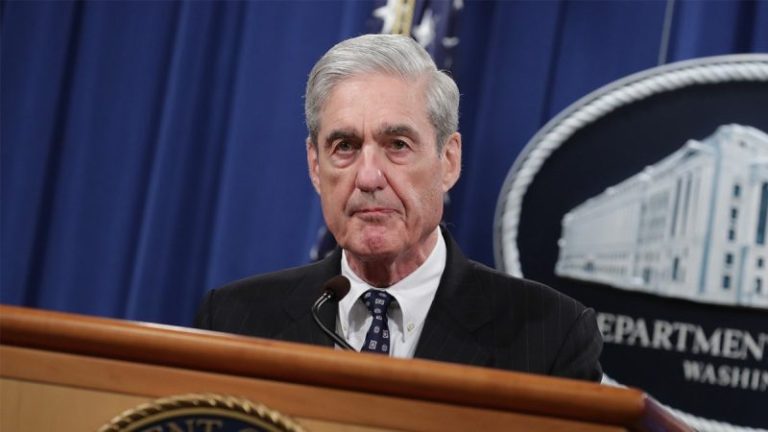
House investigators’ plan to grill former FBI Director Robert Mueller has hit a snag. 

The House Oversight Committee was set to have Mueller appear before the panel on Tuesday as part of the House’s probe into Jeffrey Epstein. However, a source familiar with the investigation told Fox News Digital that lawmakers ‘learned that Mr. Mueller has health issues that preclude him from being able to testify.’ 

‘The committee intends to withdraw its subpoena,’ the source said. 

Mueller was one of many notable figures, including the Clintons, who House Oversight Committee Chair James Comer, R-Ky., subpoenaed to testify before the panel. 

He would have been the second witness appearing in-person before the House Oversight Committee after former Attorney General Bill Barr did so last month.

His closed-door deposition was expected to see at least some lawmakers on both sides attend, with the investigation so far seeing wide bipartisan support in an otherwise highly divided era for Congress.

Mueller was most recently in the headlines for his role as special counsel investigating whether Russia interfered in the 2016 election in favor of President Donald Trump.

That probe, which did not find Trump to have committed any wrongdoing, saw 34 people indicted and eight convictions or guilty pleas, including several people associated with the president.

House investigators were expected to dive into Mueller’s time as director of the FBI. He led the bureau under former Presidents George W. Bush and Barack Obama, from September 2001 until September 2013.

It was during that window that the federal government first investigated Epstein, something Comer pointed out in his letter subpoenaing Mueller.

‘When you were FBI Director, an FBI investigation of Mr. Epstein led to an Assistant U.S. Attorney in the Southern District of Florida preparing a draft 60-count indictment of Mr. Epstein in 2007,’ Comer wrote.

‘However, the next year, Mr. Epstein pled guilty in Florida state court to two prostitution offenses, and, in exchange, he and his co-conspirators received immunity from federal prosecution through a non-prosecution agreement.’

That non-prosecution agreement has been widely criticized and is now the basis for Epstein accomplice Ghislaine Maxwell to appeal her conviction and 20-year prison sentence before the Supreme Court.

It’s not clear how much of a role Mueller would have had in that agreement. Alexander Acosta, the former Trump labor secretary and U.S. attorney in Florida who signed off on the deal, is sitting down with the House Oversight Committee for a voluntary transcribed interview later this month.

Comer sent out a flurry of subpoenas last month in relation to the Epstein probe. 

Other figures also compelled to appear after Mueller are former FBI Director James Comey, former Attorney General Loretta Lynch and ex-first couple Bill and Hillary Clinton.

This post appeared first on FOX NEWS