
Author

admin

Browsing

Customers of the athletic shoe company On have filed a class action lawsuit alleging that some of the brand’s sneakers squeak embarrassingly loudly when they walk.

The class action suit, filed in the U.S. district court in Portland — where On’s U.S. headquarters is located — on October 9, targets On’s shoes made with ‘CloudTec’ technology. A hallmark of many of the brand’s styles, ‘CloudTec’ is composed of differently shaped holes that cover the external and bottom surfaces of the shoes, according to the lawsuit.

At least 11 of On’s sneaker styles are referenced in the lawsuit, including the Cloud 5 and Cloud 6, CloudMonster, and Cloudrunner, among others.

Lawyers for the plaintiffs did not immediately respond to a request for comment. A representative for On said the company does not comment on ongoing legal matters.

According to the lawsuit, ‘CloudTec’ was created to ‘provide cushioned support when wearers land.’ But according to plaintiffs, the technology ‘rubs together’ when wearers walk or run, ‘causing a noisy and embarrassing squeak with each and every step.’

The lawsuit, however, admits that while the squeaky shoes are ‘seemingly inconsequential,’ the company has allegedly refused to provide refunds to those who are unhappy with their sneakers, leaving customers with ‘no relief after buying almost $200 shoes they can no longer wear without their doing significant DIY modifications to the shoe.’

‘No reasonable consumer would purchase Defendant’s shoes — or pay as much for them as they did — knowing each step creates an audible and noticeable squeak,’ the lawsuit states.

Nurses and those who are on their feet all day ‘bear the brunt of this defect,’ the suit argues, which allegedly causes ‘issues for consumers in their daily lives.’

According to the lawsuit, complaints about the squeaking have been widespread and documented on TikTok and Reddit, where customers share ‘DIY’ remedies for the noisy shoes, including rubbing coconut oil on the soles or sprinkling baby powder inside the sneaker.

The lawsuit alleges the company is aware of its squeaky sneakers, but its warranty does not cover reports of noisy soles as On characterizes them as ‘normal wear and tear,’ and has stated in online comments that ‘squeaking isn’t currently classified as a production defect.’

The lawsuit also alleges that the company can better make its products to avoid squeakiness, but that On has ‘done nothing’ to remedy the issue.

Plaintiffs allege they have suffered an ‘ascertainable loss’ due to fraudulent business practices and a ‘deceptive marketing scheme,’ and are seeking ‘compensatory, statutory, and punitive damages’ as well as refunds on their squeaky sneakers.


This post appeared first on NBC NEWS

Gold Fields (NYSE:GFI) has completed its AU$3.7 billion purchase of Gold Road Resources.

Gold Road rejected Gold Fields’ first acquisition proposal in March, saying it undervalued the company.

Following negotiations between the two parties, Gold Fields, through its wholly owned entity Gruyere Holdings, entered into a scheme implementation deed with Gold Road on May 5. Under the AU$3.7 billion deal, the companies agreed that Gold Road shareholders would receive fixed cash consideration of AU$2.52 per share.

‘The Scheme provides Gold Road shareholders with an opportunity to realise certain value for their Gold Road shares at a compelling premium,” said Gold Road Managing Director and CEO Duncan Gibbs at the time.

“This offer price represents a material premium to the undisturbed share price prior to the initial Gold Fields’ proposal and a material premium to longer term trading levels,’ he added.

Under the deal, Gold Fields will gain a 100 percent interest in the Gruyere project in Western Australia.

Gruyere, which the companies previously worked on together as a joint venture, currently holds an open-pit mineral resource of 6.04 million ounces, and ore reserves of 3.67 million ounces.

Its average annual gold production stands at at 350,000 ounces.

According to Gold Fields, all Gold Road shares are now owned by Gruyere Holdings. Following the scheme’s implementation, Gold Road is expected to apply to delist from the Australian Securities Exchange.

Securities Disclosure: I, Gabrielle de la Cruz, hold no direct investment interest in any company mentioned in this article.

This post appeared first on investingnews.com

Here’s a quick recap of the crypto landscape for Friday (October 17) as of 9:00 p.m. UTC.

Get the latest insights on Bitcoin, Ether and altcoins, along with a round-up of key cryptocurrency market news.

Bitcoin and Ether price update

Bitcoin (BTC) was priced at US$106,495, a 1.7 percent decrease in 24 hours. Its lowest valuation of the day was US$104,747, and its highest was US$107,411.

Bitcoin price performance, October 17, 2025.

Chart via TradingView.

The Bitcoin price remains under pressure. While sizable short liquidations of both Bitcoin and Ether have provided pockets of buying relief, overall market confidence is tempered. Volatility persists, leaving the market poised for further directional cues from key upcoming earnings and economic data releases.

Ether (ETH) was priced at US$3,830.31, a 1.2 percent decrease in 24 hours. Its lowest valuation of the day was US$3,726.31, and its highest was US$3,845.65.

Altcoin price update

  • Solana (SOL) was priced at US$181.98, a decrease of 2.1 percent over the last 24 hours. Its lowest valuation of the day was US$177.43, and its highest was US$184.74.
  • XRP was trading for US$2.30, a decrease of 1.4 percent over the last 24 hours. Its lowest valuation of the day was US$2.25 and its highest was US$2.31.

Crypto derivatives and market indicators

Bitcoin derivatives metrics indicate a complex market environment with mixed signals.

While short-term buying pressure has occurred, underlying market sentiment remains bearish or neutral, with cautious trading behavior and no strong bullish conviction at this time.

Bitcoin liquidations have totaled approximately US$22.09 million in the last four hours, with short positions making up the majority, signaling a short squeeze or bullish pressure. Ether liquidations show a similar pattern, totaling US$20.86 million, the majority of which were short positions.

Futures open interest for Bitcoin has decreased by 1.56 percent to around US$70 billion, showing strong bearish sentiment. Ether futures open interest was unchanged at around US$44 billion, reflecting market neutrality.

The perpetual funding rate for Bitcoin was -0.009, and for Ether it was -0.015, indicating bearish market sentiment.

Bitcoin’s relative strength index stands at 34.05, indicating that the cryptocurrency is in a bearish/bullish/neutral momentum, phase but not yet deeply oversold.

Fear and Greed Index snapshot

CMC’s Crypto Fear & Greed Index has fallen far into fear territory, dipping to 28 on Friday from an earlier score of 32.

CMC Crypto Fear and Greed Index, Bitcoin price and Bitcoin volume.

Chart via CoinMarketCap.

Today’s crypto news to know

Japanese banks launch yen-backed stablecoin

A group of Japan’s largest banks, including MUFG Bank, Sumitomo Mitsui Banking and Mizuho Bank, are reportedly collaborating to launch a yen-backed stablecoin using MUFG’s Progmat platform.

The initiative aims to create an interoperable payment token for over 300,000 corporate clients. MUFG will be the first user for internal settlements. The stablecoin is expected to roll out by year end, potentially establishing Japan’s first unified bank-backed stablecoin network and accelerating crypto adoption in the region’s financial infrastructure.

Uniswap expands to Solana blockchain

Uniswap has expanded its web app to support the Solana blockchain, enabling users to trade Solana-based tokens, the platform announced in a blog post on Wednesday (October 15). This move broadens Uniswap’s reach beyond Ether, lowering transaction costs and speed for DeFi traders using Solana’s high-performance network.

Ripple adds US$1 billion to XRP treasury

Ripple will reportedly add a US$1 billion purchase of its native XRP cryptocurrency to its digital asset treasury.

Sources for Bloomberg said the treasury funds, which will be raised through a special purpose acquisition company, will be used to support Ripple’s ecosystem development, liquidity provision and strategic partnerships, reinforcing Ripple’s commitment to growing XRP’s adoption in global payments.

Securities Disclosure: I, Meagen Seatter, hold no direct investment interest in any company mentioned in this article.

This post appeared first on investingnews.com

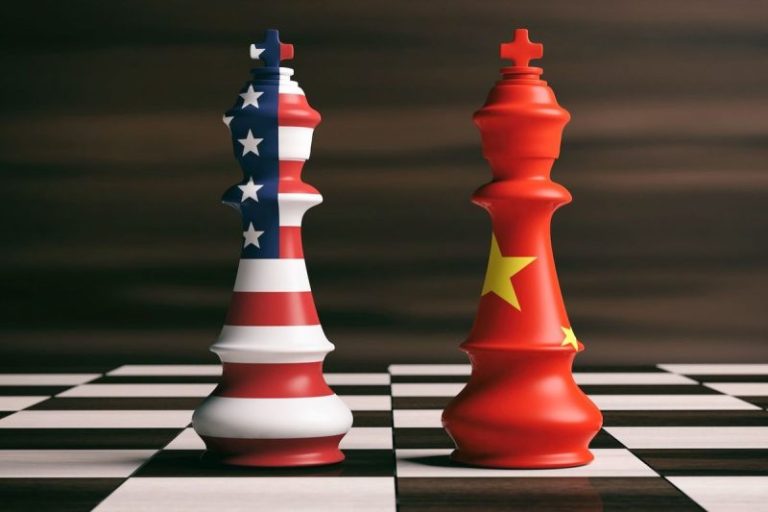
China has accused the US of “seriously distorting and exaggerating” Beijing’s newly expanded rare earths export controls, but signaled a willingness to hold talks before an expected meeting between US President Donald Trump and Chinese President Xi Jinping later this month.

“The US interpretation seriously distorts and exaggerates China’s measures, deliberately creating unnecessary misunderstanding and panic,” Ministry of Commerce spokesperson He Yongqian said Thursday (October 16).

According to the Global Times, he emphasized that Beijing’s restrictions are intended to protect national security and prevent the misuse of rare earths in military applications, not to destabilize global markets.

The remarks follow a sharp escalation in rhetoric between the two countries after China expanded its export controls last week to include five additional rare earth elements: holmium, erbium, thulium, europium and ytterbium.

The new rules will take effect in stages starting November 8, coinciding with the expiry of a six month trade truce between Washington and Beijing. Foreign companies that use Chinese materials or equipment to produce rare earths products will require Chinese export licenses, even if no Chinese firm is directly involved in the transaction.

Beijing has also vowed stricter scrutiny of applications tied to advanced semiconductors and defense systems, such as 14 nanometer chips and artificial intelligence used in weapons platforms.

Washington pushes back against Beijing

Top US officials have accused Beijing of attempting to weaponize its dominance in the global rare earths supply chain, which accounts for about 70 percent of global production and more than 90 percent of processing capacity.

At a press briefing on Wednesday (October 15), US Trade Representative Jamieson Greer called China’s new measures a “global supply chain power grab” and warned that Washington and its allies “would not accept the restrictions.”

However, he also said China has not yet implemented the full regulatory system and suggested there is still room to de-escalate. “These are drafted, or in draft, so it’s quite real,” Greer said.

“But our expectation is that they won’t implement this, and that we’ll be able to be back to where we were a week ago, where we had the tariff levels we’ve agreed to and the flow of rare earths that we agreed to.”

Secretary of the Treasury Scott Bessent echoed the sentiment, telling CNBC that the Trump administration does not want to further inflame tensions, but will act decisively if Beijing moves forward with its restrictions.

“When we get an announcement like this week with China on the rare earths, you realize we have to be self-sufficient, or we have to be sufficient with our allies,” Bessent said.

He also accused China of using its dominance in rare earths refining and processing to slash prices and drive foreign competitors out of the market. Trump has threatened to impose 100 percent tariffs on Chinese goods starting on November 1 — or sooner — if Beijing moves ahead with the export controls.

Despite the mounting friction, both sides remain committed to a scheduled meeting between Trump and Xi in South Korea later this month, highlighting the indispensable nature of rare earths to modern industry.

They are used in electric vehicles, wind turbines, smartphones and, crucially, in US military systems such as F-35 fighter jets, Tomahawk missiles and Predator drones. Each F-35 is estimated to require more than 400 kilograms of rare earths for its stealth coatings, motors and radar systems.

US eyes new critical minerals sources

In response to China’s dominance, Washington has ramped up efforts to secure alternative sources of critical minerals.

The Department of Defense earlier this year struck a deal with MP Materials (NYSE:MP), the largest US rare earths producer. It includes an equity stake, a price floor and an offtake deal to guarantee supply for defense applications.

Separately, the Trump administration is reportedly exploring a potential investment in Critical Metals (NASDAQ:CRML), a US-listed firm developing Greenland’s vast Tanbreez rare earths deposit.

Securities Disclosure: I, Giann Liguid, hold no direct investment interest in any company mentioned in this article.

This post appeared first on investingnews.com

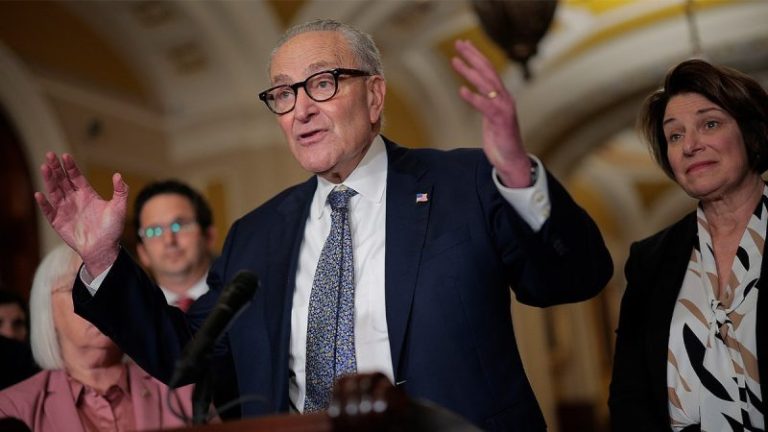
Senate Republicans are worried about the precedent that Senate Democrats have set for future funding fights as the shutdown continues into its 20th day.

Senate Minority Leader Chuck Schumer, D-N.Y., and the Democratic caucus have dug in deep on their demand for an extension to expiring Obamacare subsidies and have worked to spin the narrative from a battle to fund the government to a fistfight for healthcare.

But it’s been over three weeks since Schumer and Democrats blocked Republicans’ first attempt to pass the House GOP’s continuing resolution (CR). And since then, there are no signs that Democrats are willing to back down from their demands.

‘I think Schumer has basically sort of destroyed the institution of the Senate,’ Sen. Rick Scott, R-Fla., told Fox News Digital. ‘He has, you know, whether it’s what he’s done on the nominees or with this shutdown. I think he’s made government unmanageable. So, hopefully, this is not the way we continue to operate.’

Informal talks between the parties have ebbed and flowed over the course of the shutdown, but neither side is any closer to an off-ramp than they were when the first vote failed late last month.

Sen. Markwayne Mullin, R-Okla., has been involved in those talks but noted that this week they have been fading. When asked if he was worried that Democrats’ shutdown posture might be replicated in the future, he told Fox News Digital, ‘I can’t worry about their position.’

‘It doesn’t make sense,’ he said. ‘If there was a strategy behind it, OK, we get out, we can figure out how to move them. But there is no strategy. It’s just like, burn it all down.’

Senate Republicans now view Democrats’ shutdown position as a hostage-taking exercise, with no real ground for negotiations until after the government reopens.

‘We can’t negotiate with them until we come out of shutdown,’ Sen. John Hoeven, R-N.D., told Fox News Digital. ‘You can’t hold the government hostage. And that’s why it’s very important — we’ve said we’ll work on all these different issues they want to bring up. But you can’t shut down the government, hold the government hostage as part of negotiation.’

The informal talks, which Republicans quickly note aren’t full-blown negotiations, have produced an olive branch of sorts from Senate Majority Leader John Thune, R-S.D., who signaled to Senate Democrats that he would offer them a vote on the Affordable Care Act (ACA) premium tax credits if they voted to reopen the government.

But for a 10th time on Thursday, they blocked his effort to turn the lights back on and then hours later blocked a procedural move to allow lawmakers to consider the annual defense spending bill.

In both instances, Democrats wanted guarantees that Thune and Republicans could not provide.

‘The Dems, someday, they’re going to rue the day they did this, because we have offered up an open appropriations process, regular order, doing things that way,’ Thune told Fox News Digital.

‘I think it’s unfortunate, but it’s a reality that we’re dealing with,’ he continued. ‘And I hope they change their mind and realize that it’s in everybody’s best interest to try and at least get the government open and then start going to work and funding the government the old-fashioned way.’

Many Republicans hope that after the ‘No Kings’ rally in Washington, D.C., over the weekend that Senate Democrats may have a change of heart.

But others see it as a performative opportunity for congressional Democrats to show they are fighting back against President Donald Trump and the GOP.

‘Typically, if you reward bad behavior, you get more bad behavior,’ Sen. Bernie Moreno, R-Ohio, told Fox News Digital. ‘That’s what the Democrats are basically doing. They’re pretending that President Trump didn’t get elected last November. That’s basically the whole fight, because they have the goofballs that are going to be here Saturday, so they have to show the goofballs they’re fighting.’

This post appeared first on FOX NEWS

I went to England on a history vacation. It turned into an archaeological expedition, uncovering the bones of a once-great civilization. 

All the tourist sites are still there. You can still see the changing of the guard at Buckingham Palace, recall the ‘V’ for victory in the Churchill War Rooms or be inspired to pray at Westminster Abbey. But those are mere historical artifacts, like the pyramids of Egypt or the Acropolis in Greece. The ideals and most of the people who believe in them are long gone.

I was in London less than 24 hours before a terror attack killed two people in a Manchester synagogue. Police also killed the terrorist, a Syrian-born, 35-year-old immigrant named Jihad Al-Shamie, who they said had pledged himself to ISIS. Two innocent Jewish people are dead and a walking, talking metaphor was the cause. Jewish citizens admitted the assault was shocking but not surprising, given the rise of antisemitism in England. 

Two days later, thousands of ‘pro-Palestinians’ held a protest around Trafalgar Square. I watched police arrest a few radicals, while the crowd chanted, ‘Free Palestine.’ British Prime Minister Keir Starmer urged everyone not to protest on the Oct. 7th anniversary of the attack on Israel because he said it was ‘un-British.’ Unfortunately, it’s all too British these days. Britain has imported millions of people who hold no allegiance to its nation or its beliefs. They brought with them both a hatred of Jewish people and Western civilization. 

On Oct. 11, hundreds of thousands of ‘pro-Palestine’ protesters marched in London, shutting down streets and businesses. Even the ceasefire in Gaza didn’t satisfy them. It’s Starmer’s fault. He recognized a Palestinian state, rewarding Hamas for its barbaric assault on Israel and emboldening the protesters. 

Now, the government has to try to look good. It told universities they must ‘take stronger action to protect Jewish students,’ according to Reuters. But, a new YouGov poll says one out of five Britons holds antisemitic views. The message to Jews in England seems disturbingly similar to what it was in 1930s Germany: get out while you still can.

That is only one aspect of the failed British state. Some British people understand they had their history and culture stolen from them, but fear their government enough that they are unwilling or unable to do anything about it. One resident I met was afraid to even wear the British flag for fear of arrest. The same individual referred to England as a ‘tinder box’ that could turn into a civil war.

Those feelings aren’t surprising. A Labour Party member of the British Parliament, Jeevun Sandler, came out on Oct. 12, urging England to take down its flag from lamp posts because it was seen as ‘unwelcoming’ to immigrants. A local politician was investigated by police after she said she was ‘born and bred here.’ And a recent study from the University of Leicester’s Centre for Hate Studies complains that rural England is ‘overwhelmingly White’ and needs ‘inclusion.’ 

It’s not just politics. Canterbury Cathedral, a truly majestic monument to Christianity and Western civilization, was turned into a site for a graffiti-like art demonstration of England’s decline and fall. Christianity Today explains it as an, ‘art exhibit titled ‘Hear Us,’ which features temporary graffiti stickers that were slapped on Canterbury’s stone pillars and aim to highlight minorities while posing challenging questions to God.’ Artist Alex Vellis self describes as ‘an agender goblin-thing.’ Just the person you’d pick to decorate one of the world’s most famous religious sites.

What Vellis did is not art. It’s desecration. Thank God, I saw the cathedral just before this betrayal.

Major institutions embraced the guilt complex that causes all this. It is common for tour guides, museum employees and docents to fill their talks with leftist talking points about climate change and immigration. Many historic sites I visited were quick to demonize British history. Explorer and privateer Sir Francis Drake, who heroically defended England against the Spanish armada, is slammed as an enslaver at the very maritime museum he helped inspire.

British media is worse. The BBC is almost laughably left wing. It layered discussions of the Manchester terror attack with the typical refrain, ‘but Israel.’ Other outlets weren’t as bad, but that’s not saying much. Even commercials show the built-in biases. I saw at least 13 Unicef UK Ads on my television. Nine were about providing aid to Gaza, one more was for Yemen. There were no ads about helping Christians being genocided In Africa. Or even aiding Muslims in China or Myanmar, where they are also being persecuted. Of course, they aren’t fighting Israel in those locations.

Starmer’s many failures make him wildly unpopular and the Reform Party is polling high, looking like it could sweep future elections. The British response is to crack down even more. Rather than defend its own history and culture, the government wars against them. Already, 12,000 people are arrested each year for what they say online. 

British politician and journalist Daniel Hannan summarized these problems with the question, ‘Why are so many British leaders anti-British?’

Those problems are already here in America, they simply haven’t taken root as strongly yet. England is perhaps 10 or 20 years ahead of us. It can serve as a warning or a peek at our inevitable decline. Our campuses are filled with indoctrinated young people, ignorant of history and eager to carry whatever banner will tear down America and the West. It doesn’t matter if it’s the flag of communism or Hamas.

There are some in England who haven’t given up. But the fear is that it is too late. And looking around England, it’s hard to feel otherwise. For America, it’s not too late… yet.

This post appeared first on FOX NEWS

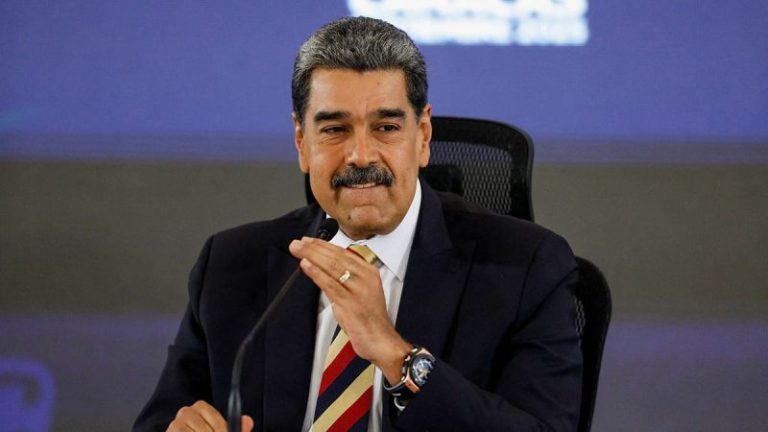
President Donald Trump said he believes Venezuela is ‘feeling heat’ amid his administration’s war against alleged drug boats in the Caribbean, which has taken out at least two vessels in just the past week. 

Although Trump has said the strikes are intended to curb the influx of drugs into the United States, experts and some lawmakers contend that they serve another purpose: to exert pressure on Venezuelan President Nicolás Maduro so he’s ousted from power. 

‘The Trump administration is likely attempting to force Maduro to voluntarily leave office through a series of diplomatic moves, and now military action and the threat thereof,’ Brandan Buck, a foreign policy analyst at the Cato Institute, said in an email to Fox News Digital Thursday. ‘Whether this constitutes a ‘regime change’ or something else is a question of semantics.’ 

The Trump administration repeatedly has said it does not recognize Maduro as a legitimate head of state, but instead, a leader of a drug cartel. In August, the Trump administration upped the reward for information leading to Maduro’s arrest to $50 million, labeling him ‘one of the largest narco-traffickers in the world.’

So far, the Trump administration has been tight-lipped when asked about Maduro, and Trump declined to answer Wednesday when asked if the CIA had the authority to ‘take out’ Maduro. 

However, Trump confirmed that he authorized the CIA to conduct covert operations in Venezuela, after the New York Times reported Wednesday he signed off on the move. Trump told reporters he did so because Venezuela has released prisoners into the U.S., and that drugs were coming into the U.S. from Venezuela through sea routes. 

Additionally, Trump confirmed Friday that Maduro offered to grant the U.S. access to Venezuelan oil and other natural resources, claiming the Venezuelan leader didn’t want to ‘f*** around’ with the U.S. 

Still, these recent strikes are unlikely to majorly undermine drug flow into the U.S., according to Buck. 

‘It is more likely that those strikes are part of this incremental effort to dislodge Maduro than merely an effort to wage war on the cartels,’ Buck said. ‘Pacific and overland routes through Mexico are considerably more prolific, and Venezuela itself is a relatively minor player, especially when it comes to fentanyl.’ 

The Trump administration has employed maritime forces to address drug threats, and has bolstered naval assets in the Caribbean in recent months. For example, Trump has sent several U.S. Navy guided missile destroyers to enhance the administration’s counter-narcotics efforts in the region starting in August.

Geoff Ramsey, a senior fellow at the Atlantic Council international affairs think tank, said that the Trump administration wants these additional forces to encourage the Venezuelan military to take matters into their own hands. 

‘What President Trump is hoping is that this deployment will signal to the Venezuelan military that they should rise up against Maduro themselves,’ Ramsey said in a Thursday email to Fox News Digital. ‘The problem is that we haven’t seen this approach bear fruit in twenty years of trying. Maduro is terrible at governing, but good at keeping his upper ranks fat and happy while the people starve.’

‘What is needed here is some kind of a road map, or a blueprint for a transition, that can be more attractive to the ruling party and those around Maduro who might secretly want change but need to see a future for themselves in a democratic Venezuela,’ Ramsey said. 

Meanwhile, the second Trump administration has adopted a hard-line approach to address the flow of drugs into the U.S., and designated drug cartel groups like Tren de Aragua, Sinaloa and others as foreign terrorist organizations in February.

Additionally, the White House sent lawmakers a memo Sept. 30 informing them that the U.S. is now participating in a ‘non-international armed conflict’ with drug smugglers, and has conducted at least six strikes against vessels off the coast of Venezuela. The U.S. seized survivors from the most recent strike Thursday — the first one involving survivors. At least 28 other individuals have died from previous strikes. 

Lawmakers on both sides of the aisle have voiced concerns over the legality of the strikes, and Sens. Adam Schiff, D-Calif., and Tim Kaine, D-Va., filed a war powers resolution in September to bar U.S. forces from engaging in ‘hostilities’ against certain non-state organizations.

The resolution failed in the Senate by a 51–48 margin on Oct. 8, but Republicans Rand Paul of Kentucky and Lisa Murkowski of Alaska voted alongside their Democratic counterparts for the resolution.

On Friday, Schiff, Kaine and Paul introduced another narrower war powers resolution that would block U.S. armed forces from participating in ‘hostilities’ against Venezuela specifically. The lawmakers said the resolution came in response to Trump’s comments considering land operations in Venezuela. 

‘The Trump administration has made it clear they may launch military action inside Venezuela’s borders, and won’t stop at boat strikes in the Caribbean,’ Schiff said in a statement Friday. ‘In recent weeks we have seen increasingly concerning movements and reporting that undermine claims that this is merely about stopping drug smugglers. Congress has not authorized military force against Venezuela. And we must assert our authority to stop the United States from being dragged—intentionally or accidentally—into full-fledged war in South America.’

When asked about lawmakers’ concerns about the legality of the strikes, Trump dismissed them and said that lawmakers were informed the vessels carried drugs. 

‘But they are given information that they were loaded up with drugs,’ Trump said on Tuesday. ‘And that’s the thing that matters. When they’re loaded up with drugs, they’re fair game. And every one of those ships were and they’re not ships, they’re they’re boats.’ 

The Associated Press contributed to this report. 

This post appeared first on FOX NEWS

Two Israel Defense Forces (IDF) soldiers were killed by terror operatives in Rafah, southern Gaza, threatening the ceasefire with Hamas, Israeli military sources confirmed to Fox News Digital on Sunday.

The soldiers, Major Yaniv Kula, 26, a company commander in the 932nd Battalion of the Nahal Brigade, and Staff Sergeant Itay Yavetz, 21, a combat soldier in the same battalion, were both based in Modi’in-Maccabim-Reut.

According to the initial IDF investigation, a militant cell had emerged from a tunnel and fired at an excavation vehicle, killing the two soldiers. A reserve soldier was also severely wounded and evacuated to a hospital, per The Times of Israel.

According to Professor Kobi Michael, senior researcher at the Institute for National Security Studies (INSS) and the Misgav Institute, the attack showed the fragility of the ceasefire deal.

‘Today’s violation of the agreement was severe,’ Michael said. ‘I assume that this is not going to be the last one,’ he told Fox News Digital.

‘Israel complies [with President Trump’s] plan and wants to continue with the realization of the plan,’ he said.

‘This agreement was violated since the first day by Hamas,’ Michael added. ‘And it continued with their behavior with regard to the hostages, the dead hostages.’

‘All the manipulation that they are doing plays on the nerves of Israeli society,’ he continued, saying the terror group is ‘making themselves as if they are not able… to find the bodies where everybody knows that they can.’

Michael detailed how the first violation came immediately after the redeployment of the IDF along the so-called Yellow Line, ‘when Hamas first sent [civilian] children in order to provoke the IDF, in order to check if the IDF is aware enough and ready enough.’

‘And then they sent militants of Hamas, and some of them were even killed along the yellow line,’ he said.

‘They continue reconstituting themselves and attacking the IDF by using the tunnels, using the shafts going out, because they now feel much freer, because the IDF left the populated area,’ he explained.

Michael also cited Hamas’ ‘butchering’ of civilians ‘because they suspect that they collaborated with Israel, or because they are afraid that these hamulas or clans might oppose them in the future… and weaken them.’

In response to Sunday’s attack, the IDF launched air and ground strikes across southern Gaza.

‘The IDF also struck and dismantled six kilometers of underground terrorist infrastructure, using over 120 munitions. The underground site was used by the terrorist organization to advance attacks against the State of Israel,’ it said in a statement.

‘The IDF will continue to respond firmly and will operate to eliminate any threat to the State of Israel,’ it said.

Israel simultaneously announced a suspension of all humanitarian aid to the Gaza Strip. 

Michael warned that Hamas has no intention of dismantling itself and cooperating with the plan when it comes to demilitarizing the Gaza Strip and establishing a mechanism of alternative governance.

‘Hamas is still using the tunnels, and intends to reconstruct the tunnels that were destroyed by Israel, because they intend to continue the war against Israel,’ he said.

He said that the militant organization has been rebuilding its ranks and reasserting control in the Strip.

‘They immediately recruited [thousands] of people and deployed them and are butchering their own people,’ Michael said.

‘They do not intend to give up on their position and influence in the Gaza Strip. They do not accept the idea of dismantling themselves. And they do not accept the idea that a foreign force or board will govern the Gaza Strip,’ he concluded.

The incident comes just days after a U.S.-brokered ceasefire, which took effect Oct. 10, temporarily halted the two-year war between Israel and Hamas. 

Under the deal, hostages were released in exchange for Palestinian prisoners, and a ceasefire was declared.

Later on Sunday, the IDF announced the resumption of the ceasefire, following retaliatory strikes.

‘In accordance with the directive of the political echelon and following a series of significant strikes in response to Hamas’ violations, the IDF has begun the renewed enforcement of the ceasefire,’ a statement read.

‘The IDF will continue to uphold the ceasefire agreement and will respond firmly to any violation of it,’ the military added.

In a statement, Israeli UN Ambassador Danny Danon said: ‘Earlier today, two IDF soldiers, Maj. Yaniv Kula and Staff Sgt. Itay Yavetz, were killed by Hamas terrorists in Rafah in what was a flagrant violation of the ceasefire agreement.’

‘We mourn their loss and send our condolences to their families. Israel has abided by the terms of the ceasefire agreement, but we will make it clear to Hamas terrorists that the IDF will do whatever it takes to protect Israel’s security,’ Danon added.

Michael, meanwhile, predicted delays in reopening the Rafah Crossing, a critical entry point for aid and movement.

‘I don’t think Rafah Crossing will open tomorrow,’ he said. ‘It will take several days until it is opened,’ he said.

This post appeared first on FOX NEWS